
A Beginner's Guide to CRM Data Silos in 2026
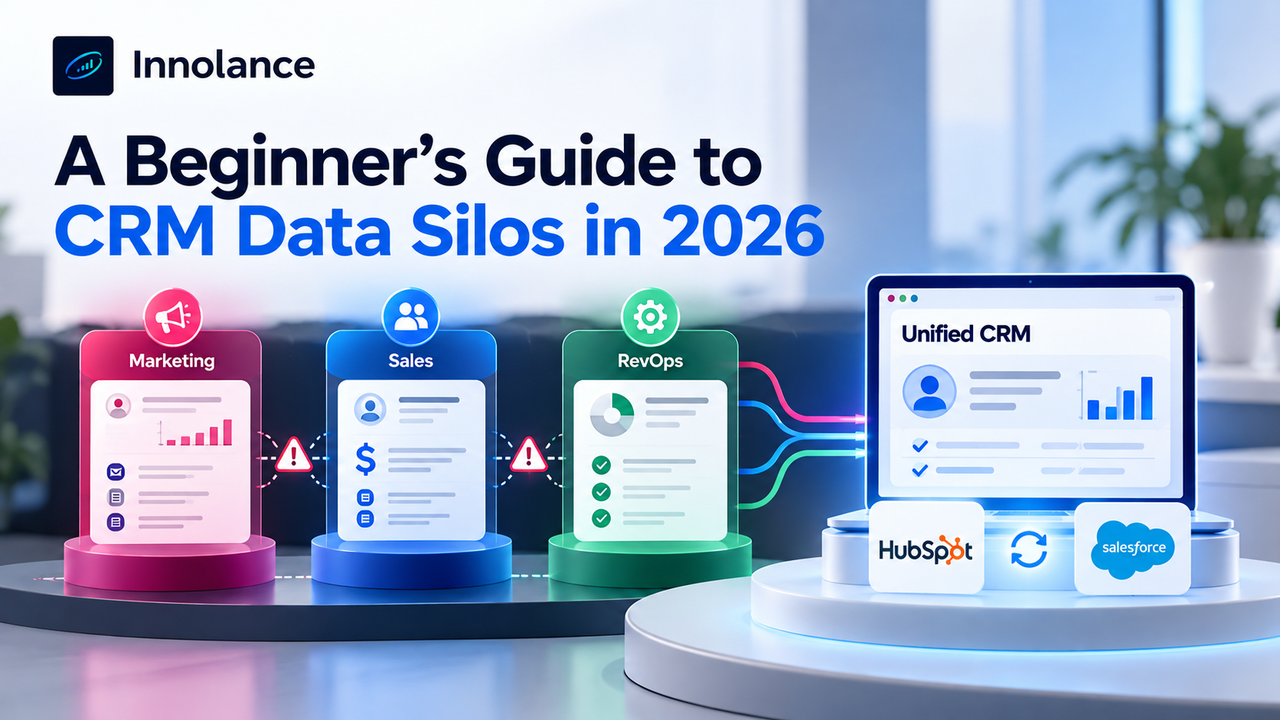
Learn why CRM data silos develop between sales and marketing, and how B2B teams can improve CRM data alignment, integration, and reporting accuracy.
Executive Summary
As B2B organizations grow, sales, marketing, and revenue operations teams often begin working with different versions of customer information. Disconnected integrations, inconsistent definitions, manual updates, and unclear data ownership create CRM data silos that weaken reporting reliability and cross-functional coordination.
For HubSpot and Salesforce users, CRM data alignment helps teams maintain consistent customer information across systems, workflows, and departments.
Direct Answer: Sales and marketing often operate on different CRM data because their systems, lifecycle definitions, data-entry practices, and reporting processes are not consistently aligned. Organizations can reduce CRM data silos by standardizing definitions, integrating systems, establishing data governance, and maintaining a trusted source of truth.
What Are CRM Data Silos?
CRM data silos occur when customer information is stored, maintained, or interpreted separately across teams or systems, preventing organizations from maintaining a consistent customer view.
For example, marketing may classify a contact as a qualified lead while sales considers the same contact unqualified.
Similarly, HubSpot and Salesforce may contain different account details, opportunity statuses, or customer ownership information.
Common warning signs include:
- Conflicting sales and marketing reports
- Duplicate customer records
- Inconsistent lifecycle stages
- Missing information during handoffs
- Manual reconciliation between systems
Key Takeaway: CRM data silos are not simply technology problems. They often reflect disconnected workflows, definitions, and ownership responsibilities.
Why Do Sales and Marketing Operate on Different CRM Data?
Sales and marketing teams frequently use CRM information for different operational purposes.
Marketing focuses on campaign engagement, lead generation, and qualification. Sales focuses on opportunities, customer relationships, and revenue forecasting.
Without shared definitions, teams may interpret the same customer information differently.
For example, marketing may count a lead as qualified based on engagement, while sales requires confirmed purchase intent.
These differences create reporting inconsistencies and weaken sales and marketing alignment.
Practical Tip: Compare how each department defines leads, qualified opportunities, customer accounts, and lifecycle stages before changing CRM technology.
What Are the Five Drivers of CRM Data Alignment?
Effective CRM data alignment requires organizations to coordinate five connected elements.
1. Shared Definitions
Establish consistent meanings for leads, contacts, accounts, opportunities, and customers.
2. System Integration
Connect HubSpot, Salesforce, and supporting platforms through reliable data synchronization.
3. Data Ownership
Assign responsibility for creating, updating, validating, and correcting customer records.
4. Workflow Consistency
Standardize how customer information moves between sales, marketing, and RevOps.
5. Reporting Alignment
Ensure departments use consistent data sources and measurement rules.
Definitions → Integration → Ownership → Workflows → Reporting
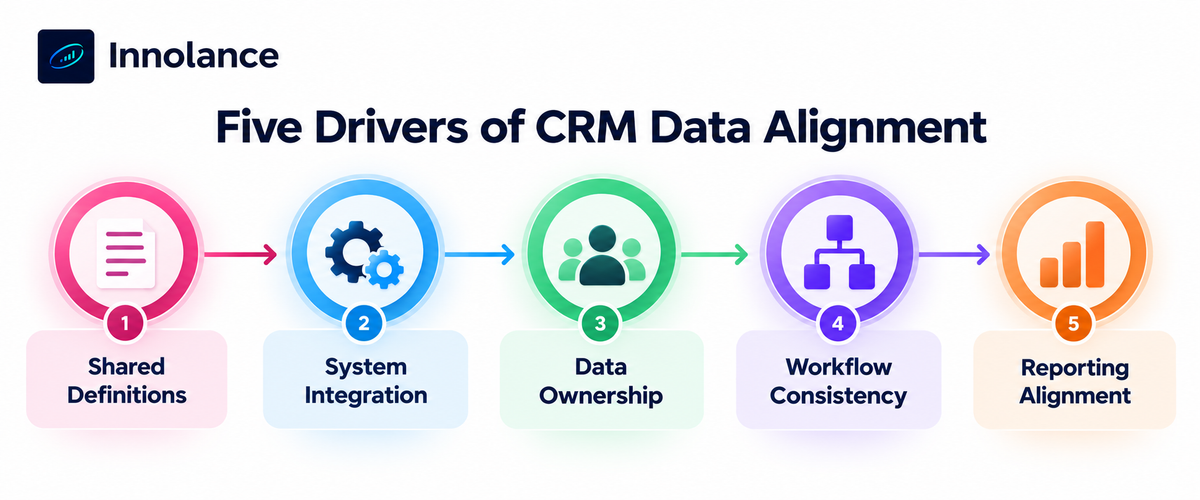
Together, these drivers help organizations reduce conflicting information and establish a more reliable foundation for customer data management.
Key Takeaway: CRM alignment depends on shared operational standards, not just connecting applications.
How Do CRM Data Silos Affect Revenue Operations?
Revenue operations (RevOps) aligns revenue-related processes, systems, and information across marketing, sales, and customer-facing teams.
When CRM data is fragmented, RevOps leaders may struggle to reconcile pipeline reports, evaluate campaign performance, or understand customer progression.
Disconnected information can create duplicate outreach, inaccurate attribution, delayed handoffs, and unreliable forecasts.
These issues also increase manual work because employees must repeatedly verify information across systems.
Key Takeaway: Poor data consistency can weaken both operational efficiency and leadership confidence in revenue reporting.
How Can HubSpot and Salesforce Teams Improve Data Consistency?
Data consistency means customer information follows compatible definitions, formats, and update rules across connected systems.
Organizations should begin by identifying which platform owns each important field.
For example, one system may be authoritative for marketing engagement while another owns opportunity status.
A reliable integration should specify:
- Which fields synchronize between systems
- Which system is authoritative for each field
- How conflicting updates are resolved
- How duplicate records are detected
- Who investigates synchronization errors
Cross-functional CRM integration works best when technical synchronization supports clearly defined business processes.
Practical Tip: Audit frequently updated fields to identify conflicting values and unnecessary overwrites.
How Can Leaders Build One Trusted Source of Truth?
A single source of truth is an agreed, authoritative source or governed set of sources used to maintain consistent business information.
It does not necessarily require storing every customer record in one application.
Instead, organizations need clear rules for where information originates, how it changes, and which values reporting systems should trust.
A practical improvement cycle is:
Audit → Define → Integrate → Govern → Monitor
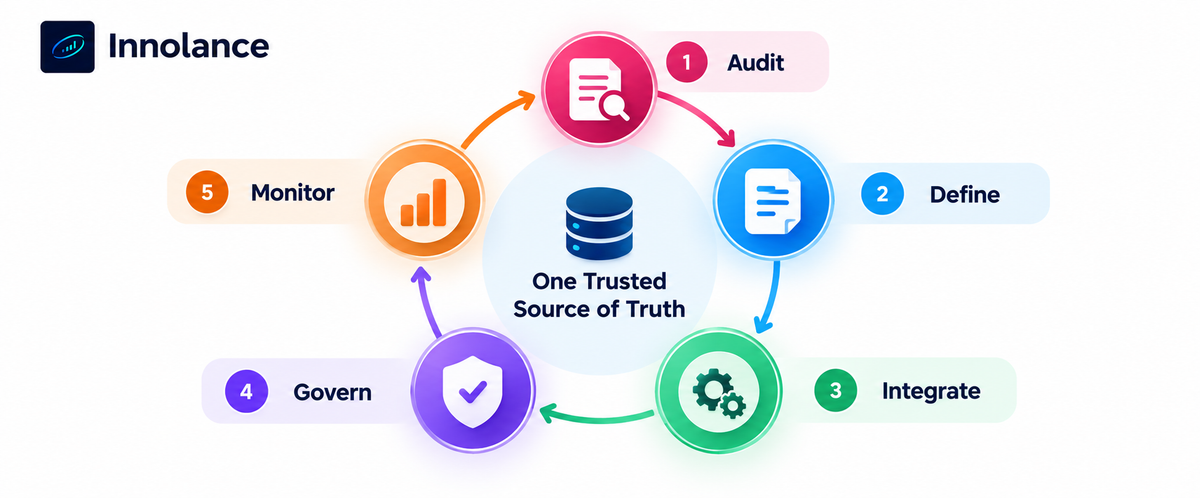
- Audit: Identify duplicate records, conflicting fields, and disconnected workflows.
- Define: Standardize lifecycle stages, field meanings, and data ownership.
- Integrate: Establish reliable synchronization between systems.
- Govern: Implement validation rules, access controls, and issue-resolution responsibilities.
- Monitor: Review data quality and integration performance continuously.
Automation supports this process, but it cannot resolve conflicting business definitions or unclear ownership by itself.
Key Takeaway: A trusted source of truth requires coordinated governance, integration, and consistent employee practices.
Which Metrics Help Leaders Measure CRM Data Alignment?
Leaders can monitor several indicators to evaluate whether CRM data alignment is improving:
- Duplicate Record Rate: Percentage of customer records identified as duplicates.
- Field Consistency Rate: Percentage of sampled shared fields containing matching, valid values.
- Synchronization Error Rate: Frequency of failed or conflicting integration updates.
- Handoff Completion Rate: Percentage of customer handoffs completed with required information.
- Reporting Reconciliation Time: Time required to resolve differences between departmental reports.
These measures help teams identify recurring problems before they affect revenue decisions.
What Should B2B Leaders Do Next?
Start by reviewing one important customer journey, from marketing qualification through sales opportunity creation.
Trace how information moves between HubSpot, Salesforce, and connected applications.
Identify where definitions change, ownership becomes unclear, or data requires manual reconciliation.
Prioritize the gaps affecting customer handoffs, reporting accuracy, and revenue visibility.
Innolance helps growing organizations examine CRM workflows, integration challenges, data governance, and cross-functional processes to identify operational gaps.
By diagnosing where systems and teams lose alignment, leaders can prioritize practical improvements that strengthen data reliability and support more predictable revenue operations.
Frequently Asked Questions
Why do sales and marketing use different CRM data?
They often use different qualification criteria, reporting definitions, applications, and update practices. Without shared governance, these differences create inconsistent customer information.
What causes CRM data silos?
Common causes include disconnected systems, inconsistent field definitions, duplicate records, manual processes, and unclear data ownership.
Can HubSpot and Salesforce share one source of truth?
Yes. Organizations can establish a trusted customer data model through defined system ownership, reliable integrations, standardized fields, and data governance.
How can organizations prevent CRM data silos during growth?
They should standardize definitions, assign data ownership, validate integrations, monitor data quality, and regularly review cross-functional workflows.
Conclusion
CRM data silos become increasingly difficult to manage as B2B organizations expand their teams, systems, and customer information.
Strong CRM data alignment requires more than connecting HubSpot and Salesforce. It depends on shared definitions, reliable integration, clear ownership, consistent workflows, and trusted reporting.
By strengthening these foundations, organizations can improve sales and marketing alignment, reduce reporting inconsistencies, and build a more reliable customer data environment for sustainable growth.