Bottleneck Analysis for App Delivery in 2026
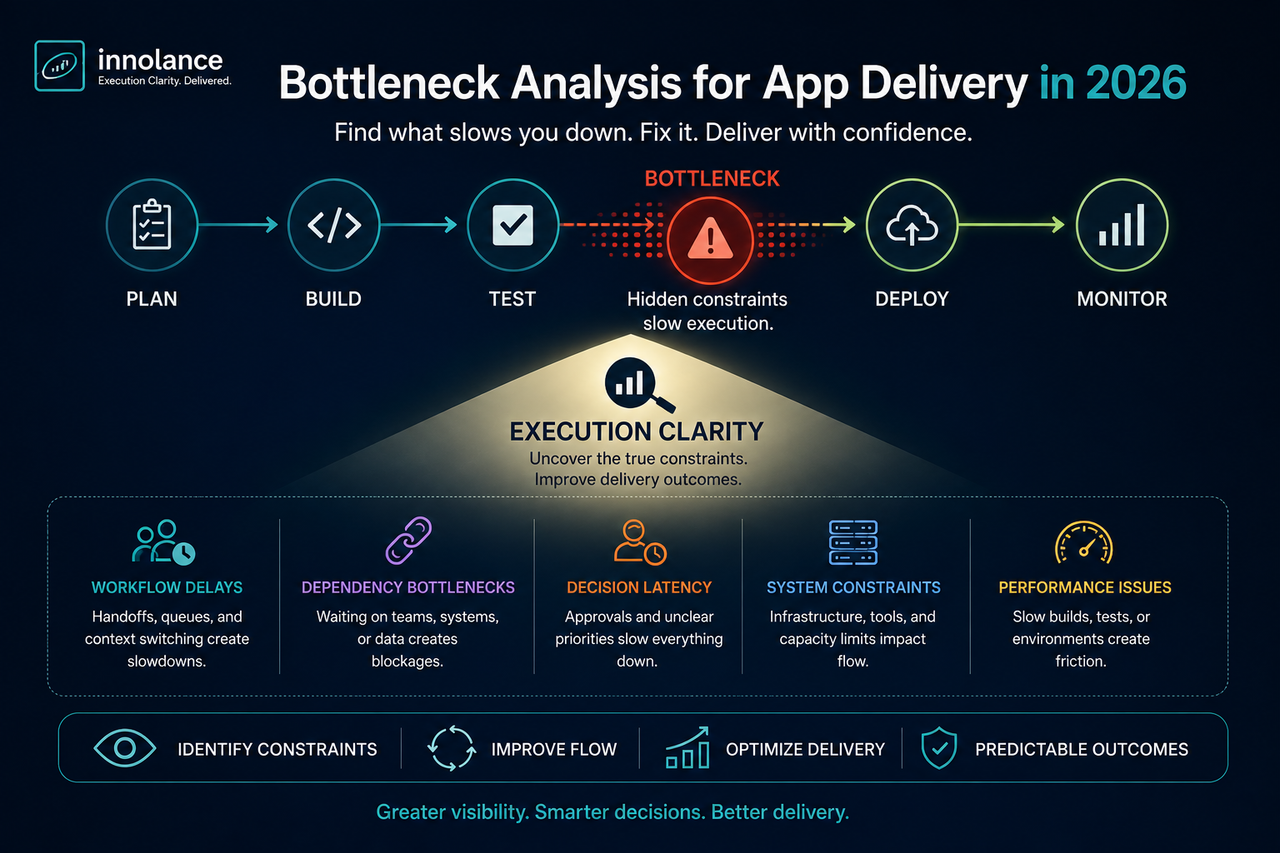
Hidden execution bottlenecks can quietly disrupt application delivery long before projects fall behind schedule. This guide explores how workflow analysis, system profiling, and measurable execution signals help CTOs and engineering leaders identify constraints, improve operational efficiency, and create more predictable software delivery through greater Execution Clarity.
Bottleneck Analysis for App Delivery in 2026
Executive Summary
As SaaS organizations scale, application delivery becomes increasingly dependent on multiple teams, interconnected systems, and evolving business priorities. While projects may appear to be progressing, hidden execution bottlenecks often slow delivery long before deadlines begin to slip.
Effective execution bottleneck identification requires more than tracking project status. Technology leaders need visibility into workflows, system performance, dependencies, and decision-making to understand where execution is breaking down and why. By identifying bottlenecks early, organizations can improve operational efficiency, strengthen delivery performance, and create more predictable outcomes.
Why Are Execution Bottlenecks So Difficult to Detect?
Most organizations rely on project dashboards, sprint metrics, and status updates to evaluate progress. While these indicators measure activity, they often fail to reveal the conditions affecting execution beneath the surface.
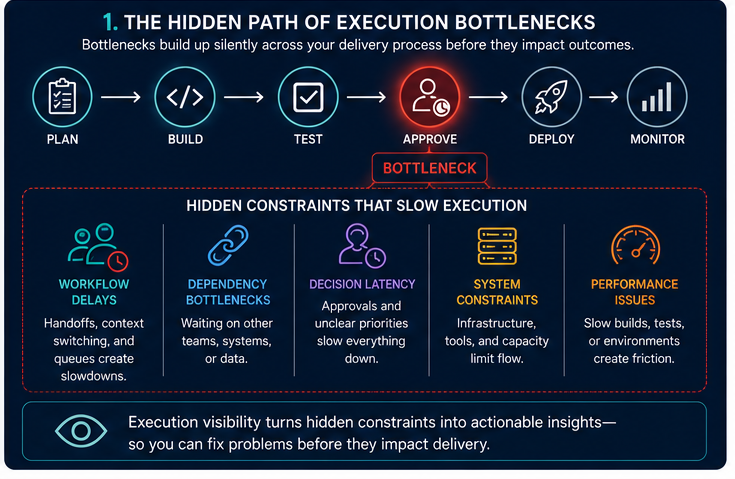
Delays caused by dependencies, approval cycles, communication gaps, or infrastructure constraints frequently remain hidden until delivery schedules begin to slip.
As software ecosystems become more complex, uncovering execution bottlenecks requires greater visibility into how work moves across teams and systems.
Practical Tip
If delivery appears healthy but commitments continue to slip, examine workflow handoffs, approval cycles, and dependency queues before introducing additional processes or reporting.
Key Takeaway: Execution bottlenecks are rarely caused by a single issue. They emerge when hidden constraints accumulate across the delivery process.
What Signals Should Technology Leaders Monitor?
Successful bottleneck analysis begins by identifying measurable signals that reveal where execution is slowing.
Technology leaders should evaluate:
- Workflow bottlenecks across teams
- Dependency delays
- Decision latency
- System performance trends
- Resource utilization
- Release readiness
Monitoring these signals provides a more complete understanding of delivery health than relying solely on project status or velocity metrics.
Key Takeaway: The earliest indicators of delivery risk often appear in workflow and operational data, not project reports.
Why Is Workflow Analysis Critical to Delivery Performance?
Modern software delivery depends on continuous collaboration between engineering, product, quality assurance, infrastructure, and operations.
When work cannot move efficiently between these functions, delivery slows. Small delays at individual handoffs can compound into larger execution challenges that affect release schedules and customer commitments.
Workflow analysis helps organizations identify where work becomes constrained, so improvements can be made before delivery performance is impacted.
Key Takeaway: Improving workflow visibility enables organizations to remove bottlenecks before they become business problems.
How Does System Profiling Improve Operational Efficiency?
Execution bottlenecks are not always caused by people or processes. In many cases, underlying system constraints contribute to slower delivery and reduced reliability.
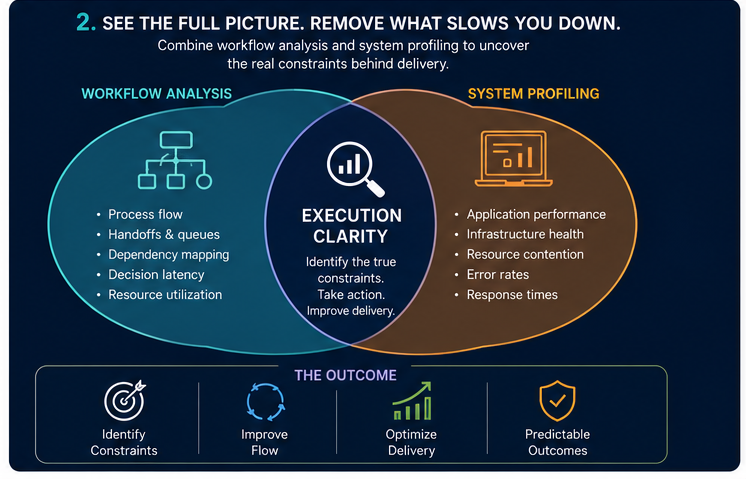
System profiling helps leaders identify infrastructure limitations, application performance issues, resource contention, and technical inefficiencies that affect delivery outcomes.
When combined with workflow analysis and performance troubleshooting, system profiling provides a more complete picture of organizational execution.
Practical Tip
Before optimizing team performance, validate that infrastructure, application performance, and operational workflows are not creating hidden constraints that limit delivery.
Key Takeaway: Understanding both technical and operational constraints leads to more effective process optimization and stronger delivery performance.
Conclusion
Improving application delivery begins with understanding where execution slows and why. Organizations that invest in execution bottleneck identification, workflow analysis, and system profiling gain the visibility needed to make faster decisions, improve operational efficiency, and deliver software more predictably.
Rather than asking, "Why are projects running late?" engineering leaders should ask:
"Where is execution slowing before delivery is impacted?"
Organizations that answer that question early are better equipped to eliminate bottlenecks, optimize delivery, and create sustainable business outcomes.