
ExecLens for Execution Clarity: A Diagnostic Guide for Mid-Sized Software Teams
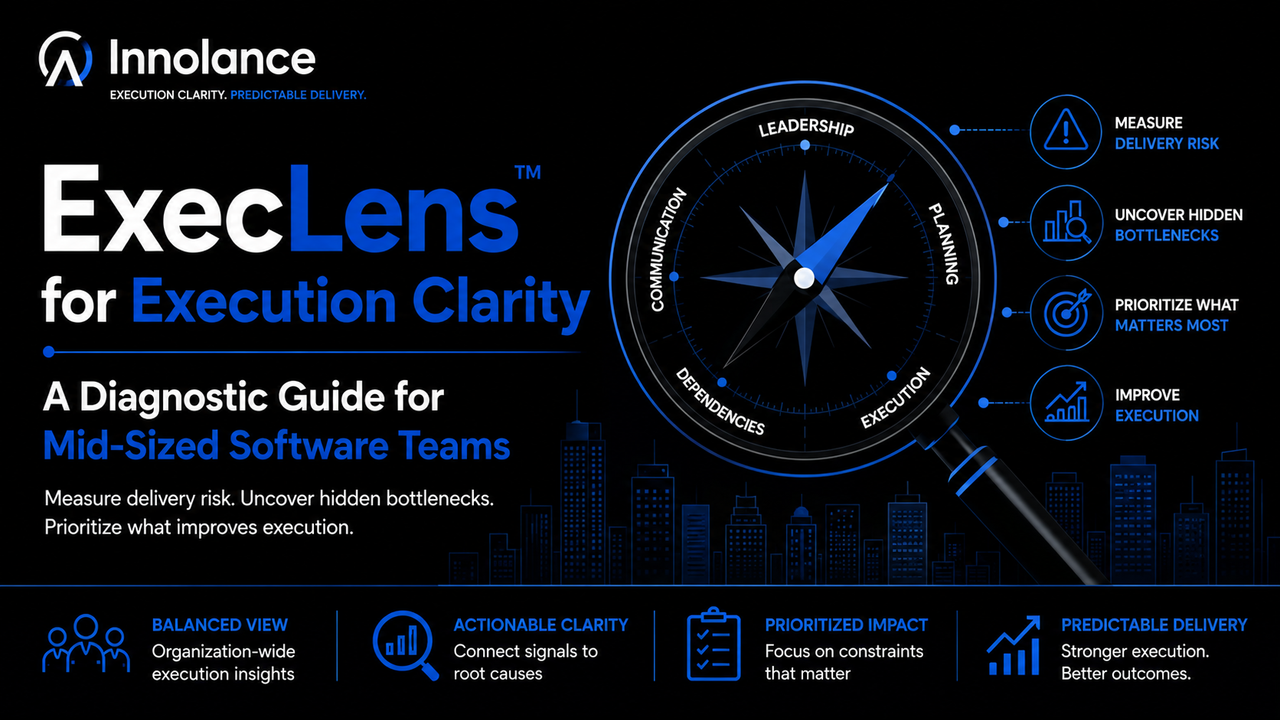
Discover how ExecLens™, an execution clarity diagnostic, helps mid-sized software leaders uncover delivery risks, identify bottlenecks, and prioritize improvements.
ExecLens for Execution Clarity in Mid-Sized Software Teams
Executive Summary
Mid-sized software organizations often reach a point where delivery becomes harder to predict. Teams may follow established processes and report healthy progress, yet leaders still encounter missed commitments, changing priorities, unresolved dependencies, and unexpected bottlenecks.
An execution clarity diagnostic helps leaders understand the organizational conditions behind these delivery challenges. Instead of focusing only on completed work, it examines how leadership, planning, communication, dependencies, and team execution influence delivery performance.
ExecLens™ helps organizations create this visibility by assessing execution maturity, surfacing hidden constraints, and helping leaders prioritize the improvements that matter most.
What Is an Execution Clarity Diagnostic?
An execution clarity diagnostic is a structured assessment of the organizational factors affecting software delivery.
Traditional delivery metrics can tell leaders what happened—such as whether a milestone was missed or velocity changed. Diagnostics go further by helping leaders understand why those outcomes occurred.
They can examine areas such as:
- Leadership alignment
- Portfolio and delivery planning
- Cross-team dependencies
- Communication effectiveness
- Decision-making
- Team execution
- Delivery risk
For mid-sized companies, this broader perspective is important because delivery problems increasingly emerge between teams, processes, and decisions rather than within a single development team.
Why Do Mid-Sized Software Companies Need Execution Clarity?
As software companies grow, execution becomes more complex. More teams, products, customers, and priorities create additional dependencies and coordination requirements.
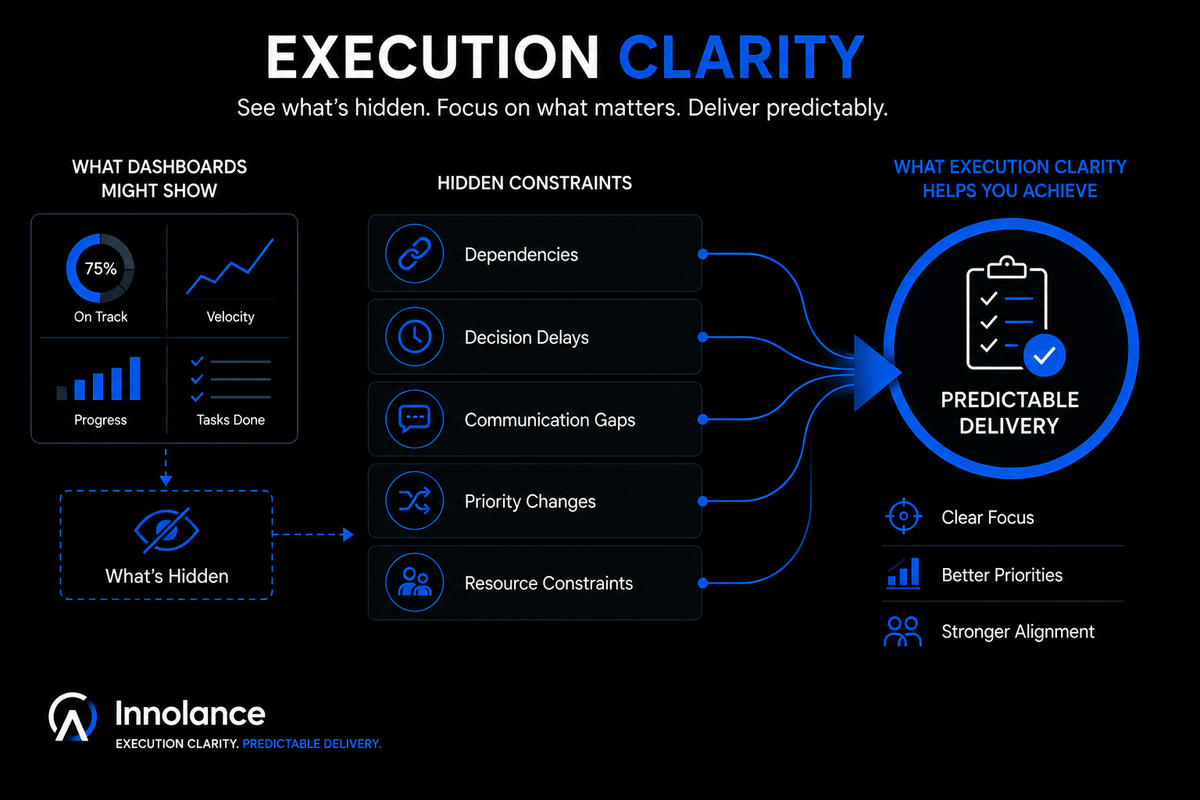
The organization may still appear healthy through dashboards and sprint reporting while underlying problems develop.
For example, teams may consistently complete planned work while frequent priority changes make broader delivery commitments unreliable. A dependency may remain unresolved across several sprints, or leadership decisions may arrive too late for teams to adjust effectively.
Without Execution Clarity, leaders may respond to these symptoms with additional processes, tools, or meetings without understanding the actual constraint.
An execution clarity diagnostic provides a more objective starting point.
How Does ExecLens™ Help Identify Delivery Risk?
ExecLens™ is Innolance’s execution clarity diagnostic designed to assess execution maturity and uncover organizational constraints affecting software delivery.
The diagnostic helps organizations establish awareness of current execution conditions, validate suspected gaps, and identify areas requiring deeper attention.
Rather than assuming a particular team or methodology is causing poor performance, ExecLens examines execution across interconnected organizational areas.
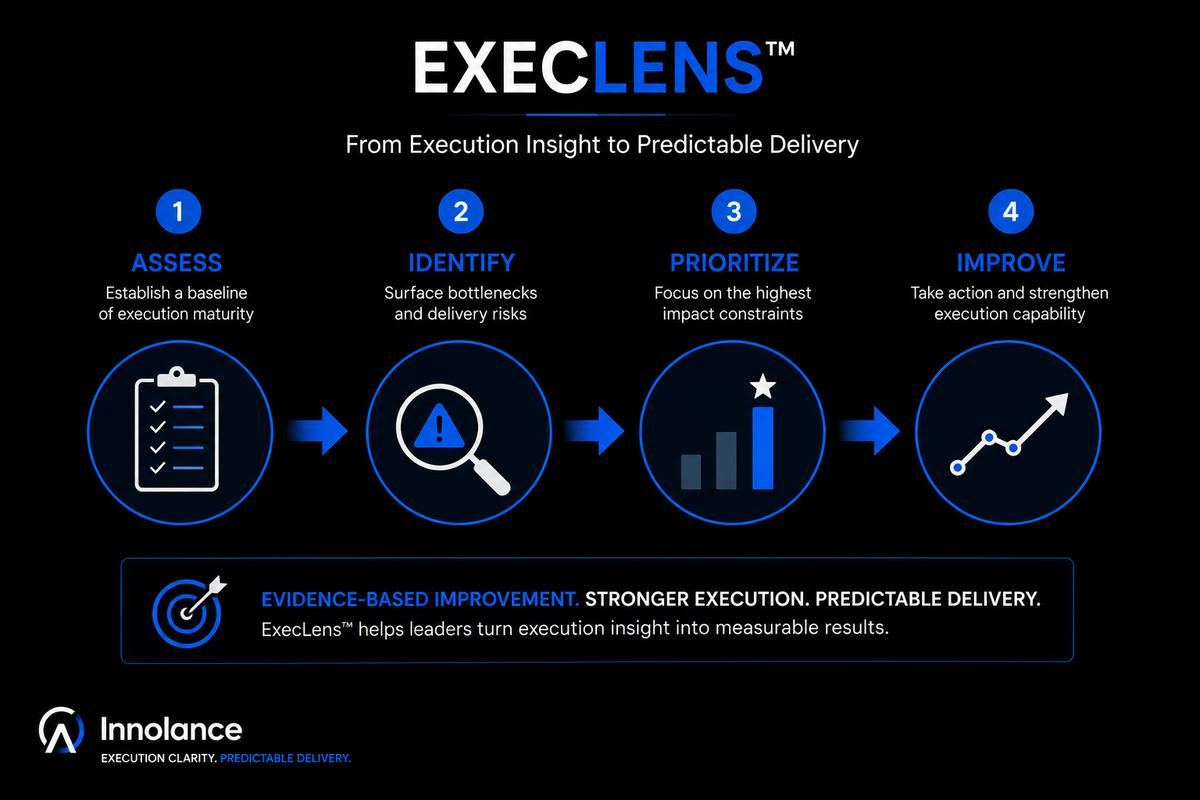
A practical diagnostic journey follows four steps:
Assess → Identify → Prioritize → Improve
First, leaders establish a clearer baseline of execution maturity. Next, potential bottlenecks and delivery risks are surfaced. Those findings help leadership prioritize high-impact areas before improvement initiatives begin.
How Is Execution Diagnostics Different from Agile Coaching?
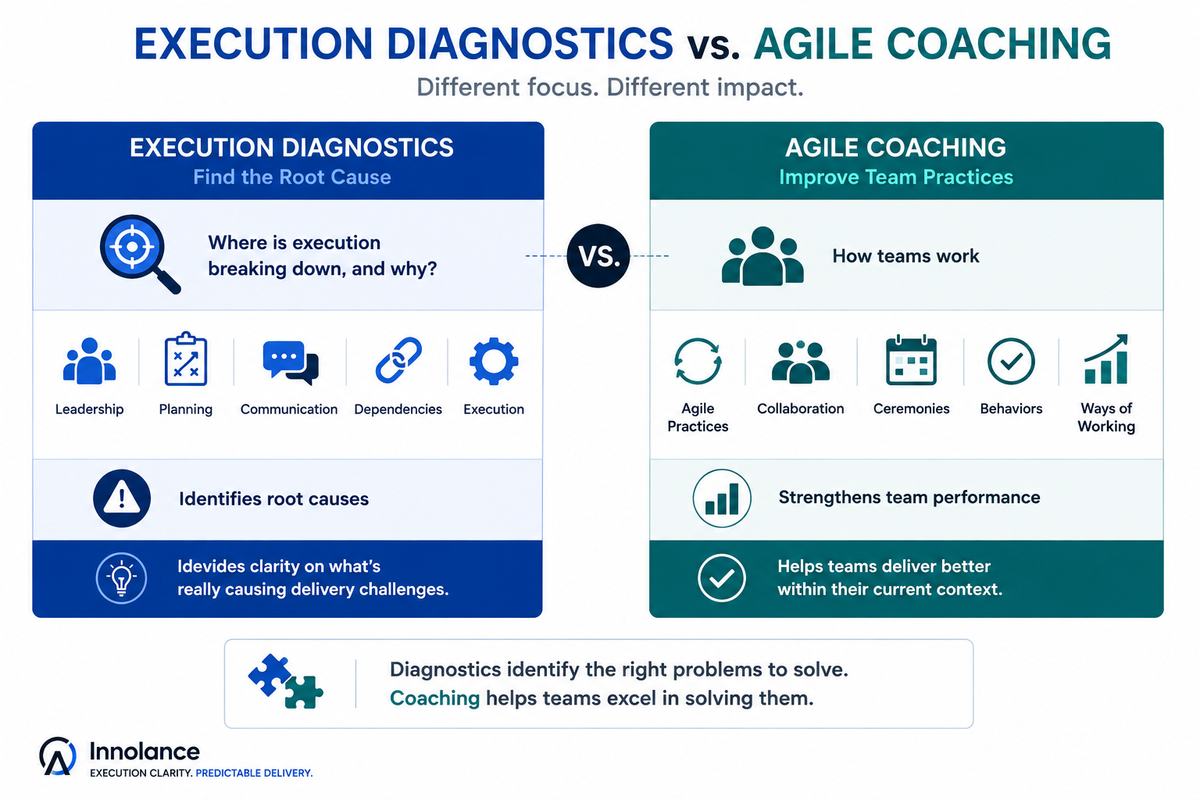
Agile coaching and execution diagnostics address different needs.
Agile coaching typically improves team practices, collaboration, Agile behaviors, ceremonies, and ways of working. It can be valuable when leaders already understand that team-level Agile practices require improvement.
An execution clarity diagnostic starts with a different question:
Where is execution breaking down, and why?
The diagnostic considers broader organizational conditions—including leadership, planning, communication, dependencies, and execution—before prescribing an improvement approach.
A diagnostic may reveal that agile coaching would be useful. But it could also show that the primary constraint is portfolio instability, delayed decisions, or cross-team dependencies.
How Is an Execution Clarity Diagnostic Different from Process Improvement?
Process improvement focuses on changing an existing process to make it more effective or efficient.
Execution diagnostics help determine what actually needs to change first.
For example, unreliable delivery forecasts might appear to indicate a planning problem. However, diagnostics may reveal that frequent priority changes or unresolved dependencies are making otherwise reasonable plans unreliable.
The sequence therefore becomes:
Diagnose → Understand → Prioritize → Improve → Measure
This reduces the risk of investing in improvements that address symptoms rather than root causes.
What Should Leaders Do Next?
Before adding another delivery tool, launching a transformation initiative, or engaging an Agile coach, leaders should determine whether they clearly understand the factors affecting delivery performance.
ExecLens™ provides a structured way to create that awareness and validate execution gaps. These insights can then support targeted improvement through Innolance’s Predictable Delivery Program (PDP), helping organizations continuously strengthen execution capability.
For mid-sized software companies, the objective is not simply more measurement. It is Execution Clarity understanding where delivery risk exists, why it exists, and which improvements can create the greatest impact.
Key Takeaways
- ExecLens™ provides an execution clarity diagnostic for identifying delivery risks and organizational constraints.
- Diagnostics help leaders understand root causes before selecting improvement initiatives.
- Agile coaching focuses primarily on team practices, while execution diagnostics examine broader execution conditions.
- Process improvement addresses change; diagnostics help determine what should change.
Execution Clarity enables mid-sized software leaders to prioritize improvements and move toward more predictable delivery.
Conclusion
Mid-sized software organizations do not need more delivery data they need greater clarity about why execution challenges occur and where improvement should begin.
An execution clarity diagnostic provides this visibility by looking beyond surface-level metrics to uncover organizational constraints, delivery risks, and root causes. ExecLens™ helps leaders assess execution maturity, validate hidden gaps, and prioritize the areas that can have the greatest impact.
Rather than replacing agile coaching or process improvement, ExecLens helps organizations determine where those approaches can create the most value. By establishing Execution Clarity first, leaders can make more informed decisions, focus improvement efforts, and build a stronger foundation for predictable software delivery.