
Execution Assessment Framework for Software Delivery 2026
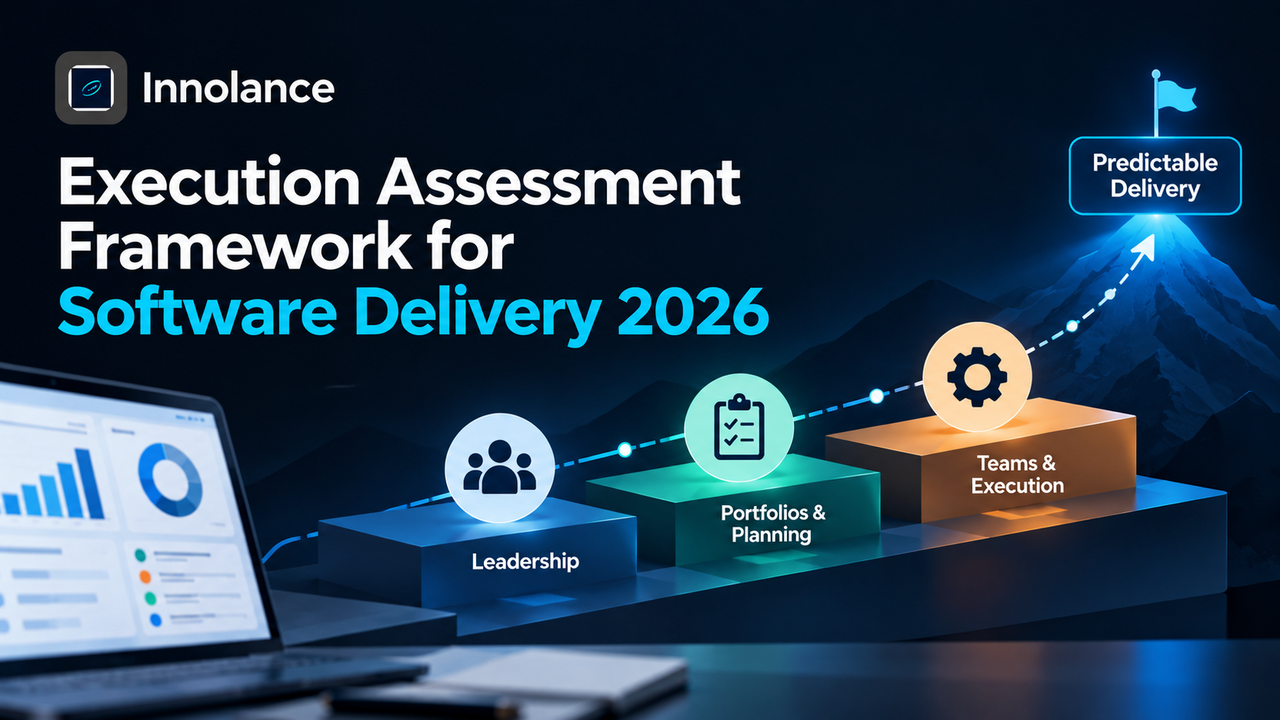
Learn how execution diagnostics combine metrics, interviews, and a 30-60-90 day assessment plan to improve software delivery predictability.
Executive Summary
Software delivery problems are often visible before their causes are understood. Roadmaps slip, commitments change, dependencies remain unresolved, and leaders receive different explanations for why execution is slowing down.
An execution assessment framework provides a structured way to evaluate how work moves across leadership, portfolio planning, and delivery teams. Instead of assessing individual performance, it identifies organizational conditions that make delivery unpredictable.
Direct Answer: Execution diagnostics evaluate where software delivery is breaking down and why by combining delivery metrics, stakeholder interviews, workflow analysis, dependency reviews, and decision-flow analysis. Unlike agile coaching, which typically focuses on improving agile practices and ways of working, execution diagnostics examine broader organizational factors affecting delivery performance.
What Are Execution Diagnostics?
Execution diagnostics are a structured evaluation of the organizational conditions affecting delivery performance.
Execution Clarity the ability to understand where execution is breaking down and why helps leaders identify bottlenecks earlier, strengthen alignment, and make informed decisions before delivery is impacted.
The goal is not simply to determine whether teams are following a methodology. It is to understand why commitments become unreliable and where constraints are developing.
Execution bottlenecks typically result from five connected factors: organizational complexity, communication gaps, decision delays, delivery dependencies, and technology complexity.
Key Takeaway: A delivery assessment should diagnose the execution system rather than evaluate individual teams.
What Should an Execution Assessment Framework Evaluate?
A practical organizizational execution evaluation should examine three connected levels:
Leadership → Portfolios & Planning → Teams & Execution
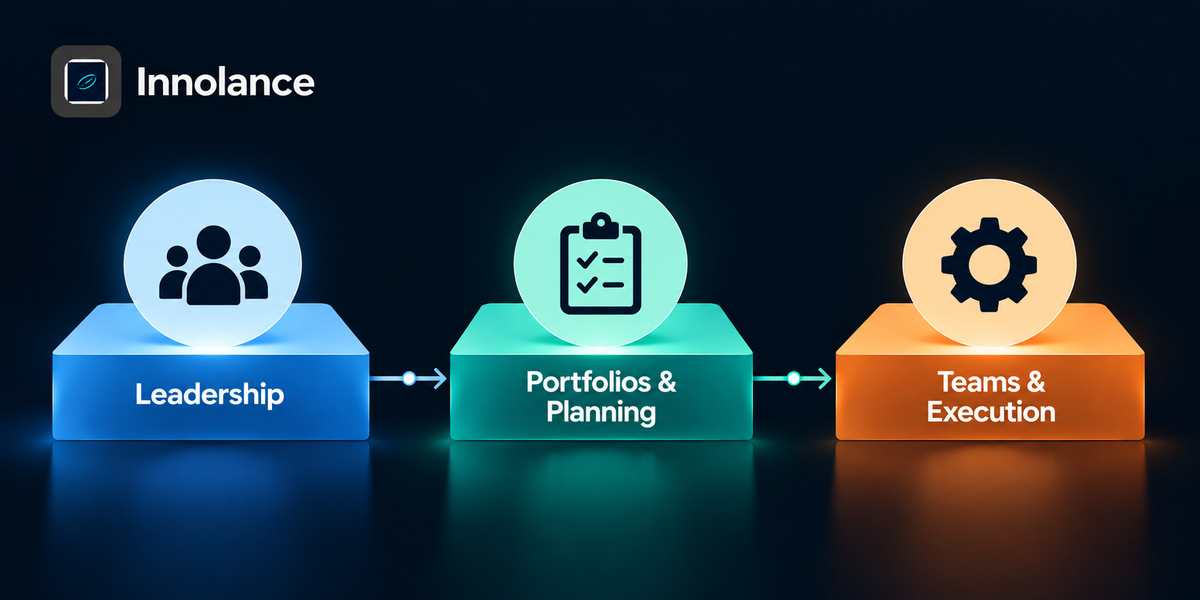
At the Leadership level, assess whether leaders have sufficient visibility into priorities, delivery risks, constraints, and unresolved decisions.
At the Portfolios & Planning level, evaluate prioritization, capacity, roadmap assumptions, dependencies, and alignment between commitments and available resources.
At the Teams & Execution level, examine workflow, blocked work, handoffs, commitment reliability, and execution constraints.
Looking across all three levels helps distinguish an isolated delivery problem from a broader organizational constraint.
Which Metrics Should Leaders Use in a Delivery Assessment?
No single metric explains software delivery performance. Leaders need indicators that reveal predictability, flow, stability, and alignment.
Useful measures include:
- Commitment Reliability: How consistently does completed work match planned commitments?
- Cycle Time: How long does work take after execution begins?
- Lead Time: How long does work take from request to completion?
- Flow Efficiency: How much time is spent progressing versus waiting?
- Roadmap Health: How stable and achievable are roadmap commitments?
- Decision Velocity: How quickly are delivery-critical decisions resolved?
- Execution Stability Index (ESI): A combined view of execution stability over time.
Metrics should be interpreted alongside qualitative evidence. Increasing cycle time, for example, could reflect dependencies, changing priorities, approval delays, or technology complexity.
What Interview Questions Reveal Execution Problems?
Stakeholder interviews provide context that dashboards alone cannot capture.
Leaders can ask:
- Which commitments are most likely to change, and why?
- Where does work typically wait?
- Which dependencies repeatedly delay delivery?
- How often do priorities change after execution begins?
- Which decisions take the longest to resolve?
- Where do leadership and delivery teams see project health differently?
- Which risks become visible only after delivery dates are threatened?
- What information would help teams make decisions earlier?
Interviewing executives, portfolio leaders, product managers, engineering leaders, and delivery teams can reveal recurring patterns across the organization.
Practical Tip: Look for themes that appear across multiple roles rather than relying on one stakeholder's explanation.
How Do Execution Diagnostics Differ From Agile Coaching?
Execution diagnostics and agile coaching can address related delivery challenges, but their purposes differ.
Agile coaching generally focuses on improving agile practices, collaboration, roles, ceremonies, and team ways of working.
Execution diagnostics begin with a broader question:
What organizational conditions are making delivery unpredictable?
The assessment may uncover portfolio overload, leadership decision delays, cross-team dependencies, unstable priorities, technology constraints, or limited delivery visibility.
The two approaches can complement each other. Diagnostics identify where execution constraints exist and provide evidence about their causes. Agile coaching may then be useful when team practices are part of the identified constraint.
What Does a 30-60-90 Day Execution Assessment Look Like?
A structured delivery performance analysis can move from visibility to diagnosis and improvement.
Days 1–30: Assess
Establish a baseline. Review delivery metrics, roadmap commitments, portfolio priorities, dependencies, workflow data, and governance. Conduct stakeholder interviews and identify recurring execution signals.
Days 31–60: Diagnose
Connect quantitative and qualitative evidence. Determine where delays originate, identify systemic constraints, examine decision flow, and distinguish symptoms from underlying causes.
Days 61–90: Improve
Prioritize the highest-impact constraints, establish ownership, define improvement actions, and monitor whether delivery performance becomes more stable.
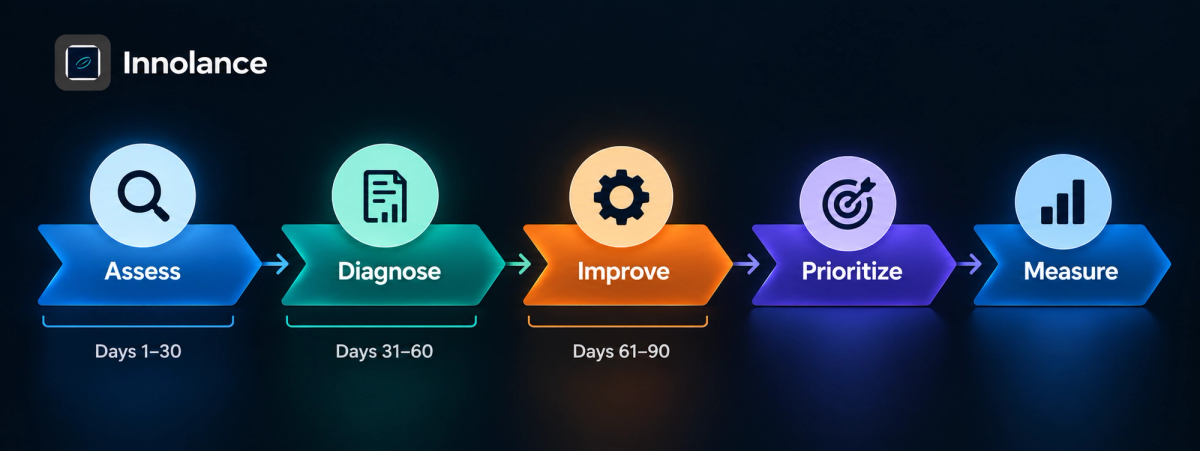
The goal is not simply to complete an assessment. It is to establish an evidence-based improvement cycle.
How Should Leaders Evaluate an Execution Assessment?
A useful assessment should produce more than observations.
Leaders should expect:
- A baseline of current delivery performance
- Evidence of significant execution constraints
- Connections between metrics and organizational causes
- Clear ownership of identified issues
- Prioritized improvement opportunities
- Measures for tracking progress
- A practical 30-60-90 day improvement plan
The outcome should provide greater Leadership Visibility into why delivery performance changes rather than another dashboard without diagnostic context.
What Should Leaders Do Next?
Start with one portfolio or strategically important delivery stream.
Review commitments, flow metrics, dependencies, decision delays, and roadmap changes. Then interview leaders and delivery teams independently and compare their explanations with operational evidence.
Where the explanations and evidence diverge, investigate further. These gaps can reveal where additional Execution Clarity™ is needed.
Innolance approaches execution improvement as an external diagnostic process identifying where execution is breaking down, clarifying organizational constraints, and helping leaders prioritize improvements that strengthen Delivery Predictability.
Conclusion
Software delivery assessments are most valuable when they explain why performance is changing rather than simply reporting whether delivery is ahead or behind plan.
A structured execution assessment framework combines metrics, stakeholder interviews, workflow evidence, dependency analysis, and decision-flow analysis across leadership, portfolios, and teams.
By following a 30-60-90 day approach, CTOs, COOs, and Delivery PMO leaders can move from delivery symptoms toward stronger Execution Clarity and more predictable software delivery.