
How Duplicate Prevention Protects CRM Data at Scale
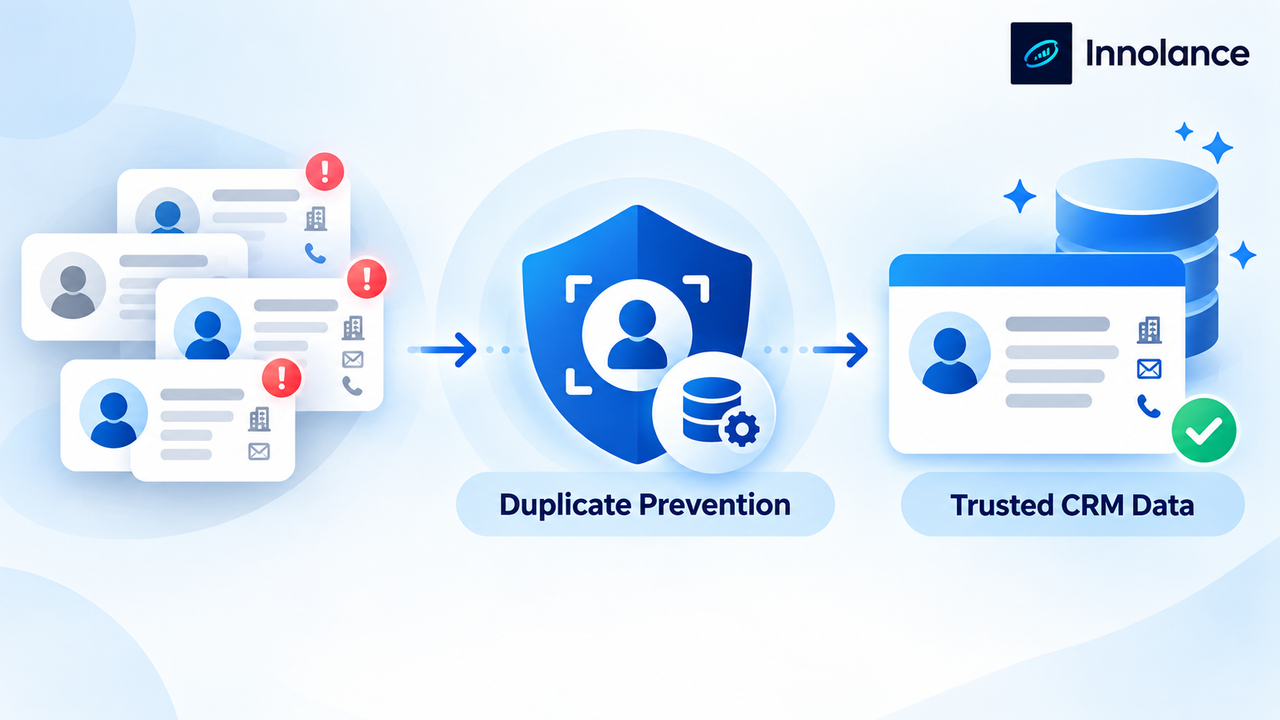
Learn how duplicate data prevention protects CRM data quality, preserves data integrity, and keeps HubSpot and Salesforce reliable as teams scale.
Executive Summary
As B2B organizations grow, CRM data moves through more teams, tools, integrations, imports, and handoffs. This creates more opportunities for duplicate contacts, companies, and customer records to enter the CRM.
For HubSpot- and Salesforce-centric RevOps teams, duplicate data prevention is a core part of CRM data quality management. Preventing duplicates at entry, establishing reliable matching rules, defining ownership, and continuously monitoring data quality help preserve CRM data integrity as operations scale.
Direct Answer: Duplicate prevention protects CRM data at scale by reducing conflicting customer records before they spread into workflows, reporting, segmentation, and revenue processes.
Why Do Duplicates Increase as CRM Processes Scale?
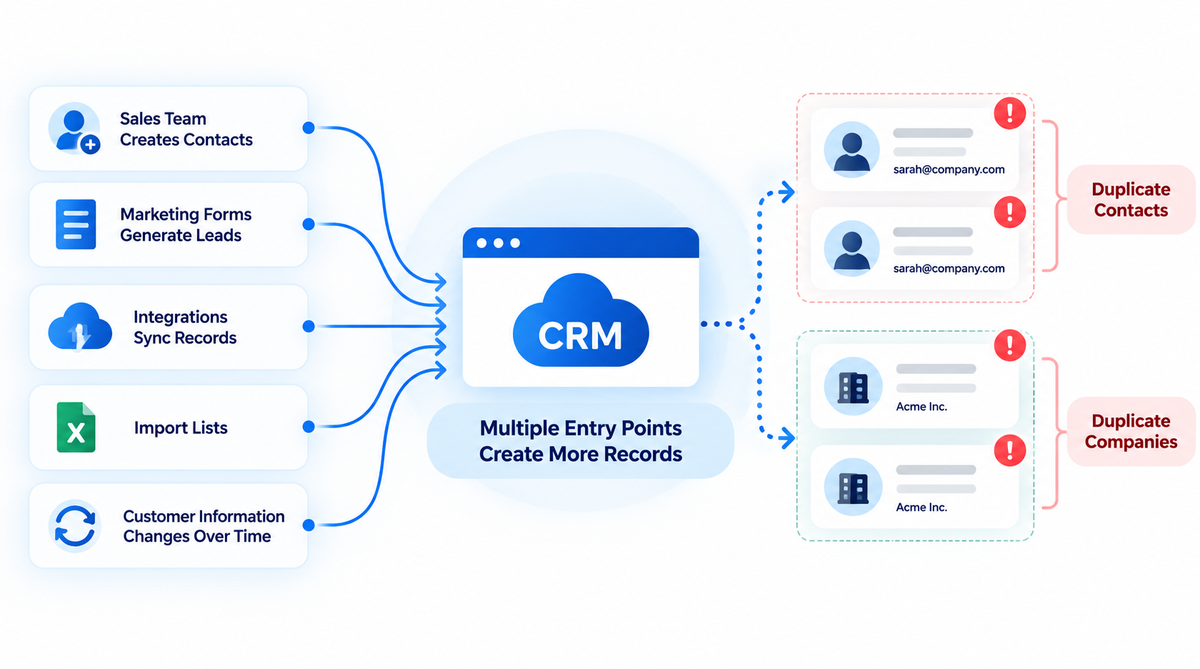
CRM growth increases both data volume and the number of entry points.
Sales representatives create contacts. Marketing forms generate leads. Integrations synchronize records. Teams import lists. Customer information changes over time. When these processes do not follow consistent matching and validation standards, multiple records can begin representing the same person or organization.
The result is more than database clutter. Duplicate records make it harder for teams to determine which information should be treated as the trusted source.
Key Takeaway: Duplicate risk grows when CRM processes scale faster than the controls governing record creation.
How Do Duplicates Damage CRM Data Integrity?
A duplicate record can split the customer story across multiple places.
One contact might contain the latest email address while another contains recent sales activity. Separate company records can divide associations, and competing records can make segmentation, automation, reporting, and handoffs less dependable.
This weakens CRM data integrity because teams no longer have a consistent representation of the customer.
Data cleansing can resolve existing duplicates, but repeatedly merging records does not address why duplicates are entering the CRM.
Practical Tip: If duplicate records repeatedly return after cleanup, investigate the record-creation process rather than treating each duplicate as an isolated data problem.
How Should RevOps Prevent Duplicate Data?
Effective duplicate data prevention starts at the point of entry.
RevOps teams should determine which fields reliably identify a unique person or company and configure matching logic around those identifiers. Email addresses, company domains, phone numbers, and organization-specific IDs may be useful depending on the CRM process.
Prevention should combine:
- Standardized record creation
- Reliable matching criteria
- Duplicate alerts or blocking rules
- Clear data ownership
- Controlled imports and integrations
- Ongoing duplicate monitoring
This shifts RevOps from reactive cleanup toward preventive data quality management.
What Should RevOps Measure?
Duplicate prevention should be measurable.
Teams can monitor duplicate rates, duplicate sources, repeat duplicate patterns, records triggering matching rules, and the percentage of identified duplicates successfully resolved.
These measures help answer an important question: Are teams simply cleaning duplicates faster, or is the CRM becoming better at preventing them?
How Do You Scale Duplicate Prevention Without Slowing Teams Down?
The goal is not to make CRM data entry unnecessarily restrictive. It is to place controls where poor-quality records are most likely to affect revenue execution.
Start with the highest-impact objects and entry points. Define reliable matching criteria, establish ownership, and automate duplicate detection where appropriate.
A scalable model progresses from:
Manual Cleanup → Duplicate Detection → Entry Controls → Continuous Prevention
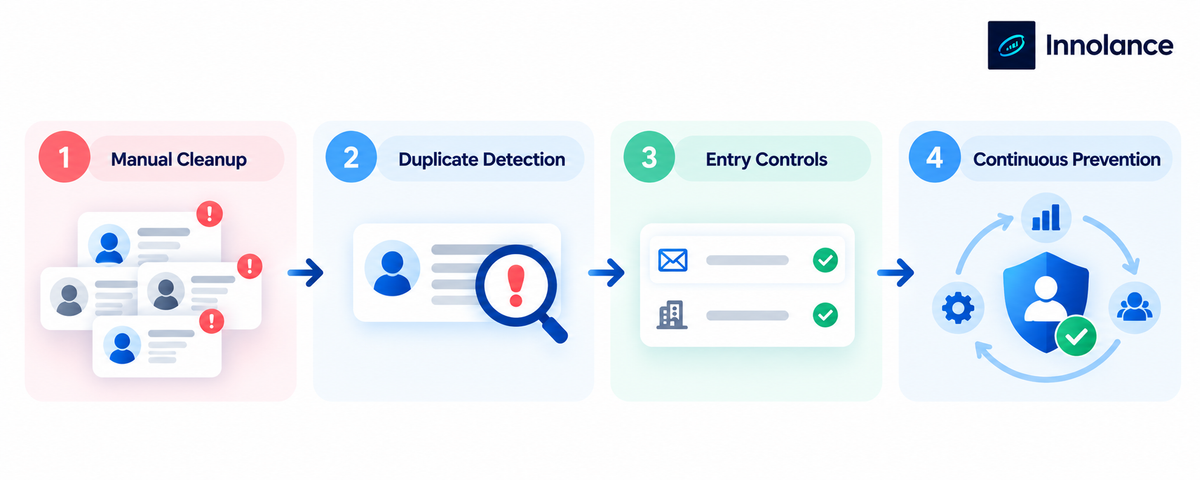
This progression helps teams move from repeatedly correcting CRM data toward preventing duplicate records before they affect downstream workflows and reporting.
What Should RevOps Leaders Do Next?
Identify where duplicate records enter the CRM today. Review forms, imports, integrations, manual record creation, and cross-team handoffs.
Then determine which identifiers can reliably distinguish unique records and where matching or duplicate rules should be applied.
For HubSpot and Salesforce teams, the objective is not simply to maintain a cleaner database. It is to build scaling CRM processes that preserve trustworthy customer and revenue data as complexity increases.
Conclusion
Duplicate data becomes harder to control as organizations add users, systems, integrations, and workflows.
One-time data cleansing can correct existing records, but sustainable CRM data quality requires prevention. By combining matching standards, entry controls, ownership, monitoring, and ongoing governance, RevOps teams can reduce duplicate creation before it damages downstream processes.
At scale, duplicate prevention protects more than CRM cleanliness. It protects the integrity and trustworthiness of the data that revenue teams use to operate and make decisions.