Key CRM Data Quality Gaps During RevOps Growth
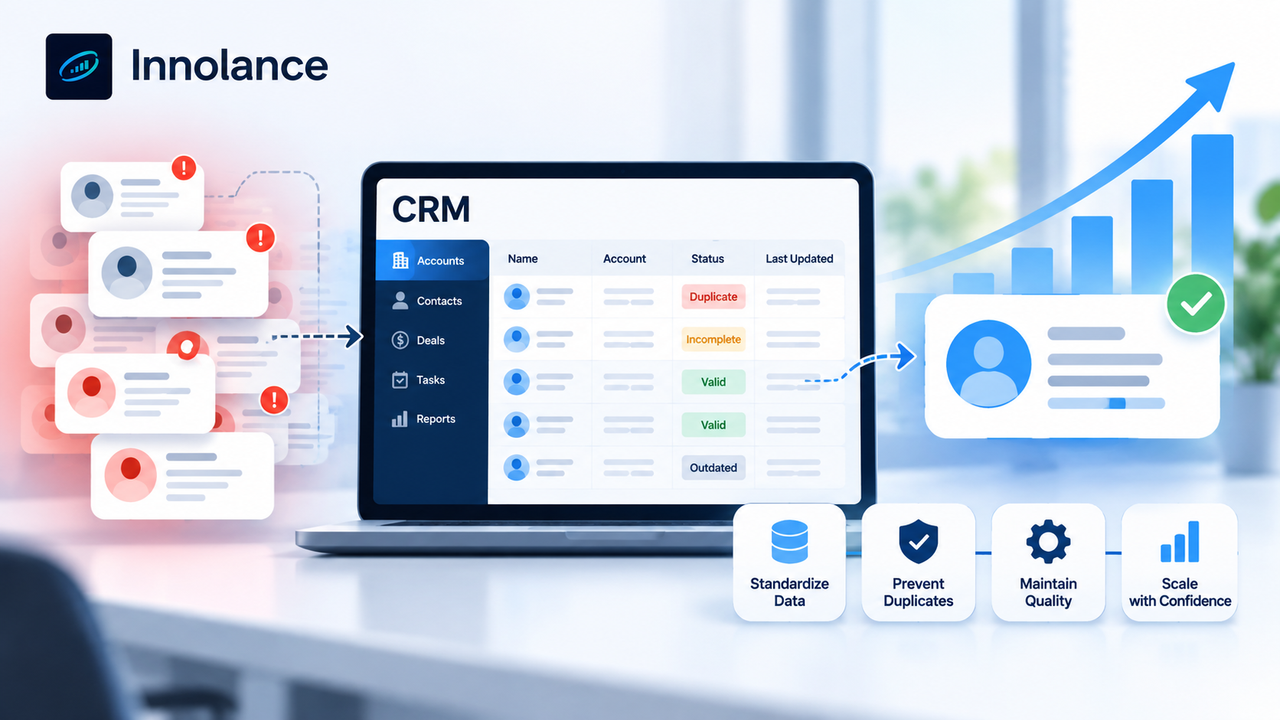
Learn the key governance gaps that weaken CRM data quality during RevOps growth and what teams should standardize first to maintain reliable data.
Executive Summary
As revenue operations teams grow, CRM data becomes harder to govern. More users, integrations, workflows, imports, and customer touchpoints create more opportunities for inconsistent fields, duplicate records, unclear ownership, and outdated information.
For RevOps leaders and CRM administrators, maintaining CRM data quality requires more than periodic cleanup. Growing teams need clear ownership, standardized data definitions, controlled record creation, duplicate prevention, and ongoing quality monitoring.
Direct Answer: CRM data quality deteriorates during RevOps growth when the number of people, systems, and workflows creating data expands faster than the standards and controls governing that data.
Why Does CRM Data Quality Decline During Growth?
Growth increases CRM complexity.
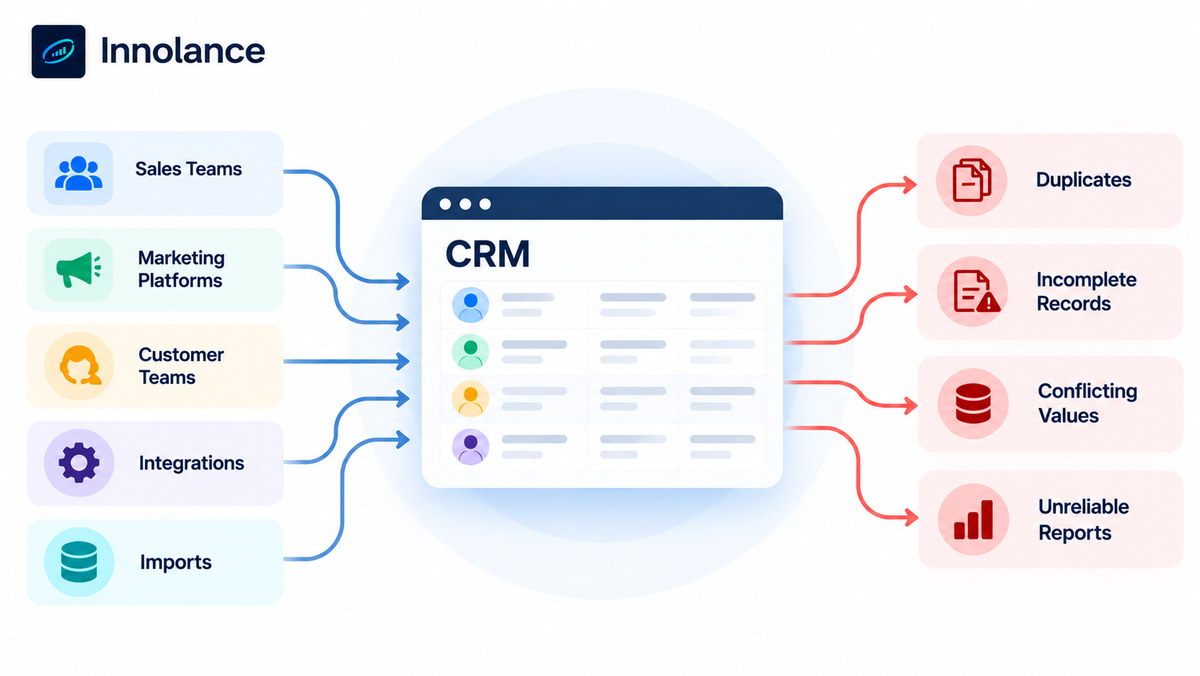
Sales teams create and update opportunities. Marketing platforms generate and enrich leads. Customer teams add account information. Integrations continuously synchronize data between systems. As these activities multiply, even small inconsistencies can spread across the CRM.
The problem is often not the CRM platform itself. The larger gap is a lack of shared rules governing how information should be created, updated, validated, and maintained.
Without those rules, teams can end up with different definitions for the same information, incomplete records, conflicting values, and unreliable reporting.
Key Takeaway: CRM complexity grows quickly when operational processes scale without corresponding data governance.
What Governance Gaps Create CRM Data Quality Problems?
Several gaps commonly appear as RevOps operations expand.
Unclear ownership makes it difficult to determine who is responsible for maintaining important fields and records.
Inconsistent standards allow teams to use different formats, definitions, and values for the same business information.
Weak entry controls allow incomplete or incorrectly formatted records to enter the CRM.
Duplicate records can fragment customer histories and create uncertainty about which record contains the most reliable information.
Uncontrolled integrations can introduce conflicting values or synchronize poor-quality information across systems.
Together, these gaps weaken CRM data integrity and make downstream automation, reporting, and decision-making less dependable.
What Should Growing RevOps Teams Standardize First?
Teams do not need to govern every CRM property at once.
Start with the information that directly affects revenue processes, reporting, automation, and customer handoffs. This may include account identifiers, lifecycle stages, lead sources, opportunity stages, ownership fields, and other critical revenue data.
For each critical field, define:
- What the field means
- Who owns it
- When it is required
- Which values are acceptable
- Where the data originates
- How it should be maintained
This creates a shared foundation for data quality management rather than relying on individual teams to interpret CRM fields differently.
Why Is Data Cleansing Alone Not Enough?
Data cleansing is important because existing CRM problems still need to be corrected. Teams may need to merge duplicate records, standardize formatting, fill critical gaps, or remove obsolete information.
But cleanup is reactive.
If the processes creating poor-quality data remain unchanged, the same problems return. RevOps teams can become trapped in a cycle of cleaning records without improving the underlying system.
Practical Tip: When the same data issue repeatedly appears after cleanup, trace it back to the form, workflow, integration, import, or manual process creating it.
How Can RevOps Protect CRM Data Integrity as It Scales?
Sustainable CRM data quality requires controls that prevent problems earlier.
After defining ownership and standards, teams can embed them into CRM processes through required fields, validation rules, standardized values, controlled integrations, and duplicate data prevention.
A scalable model progresses from:
Reactive Cleanup → Defined Ownership → Standardized Controls → Continuous Governance
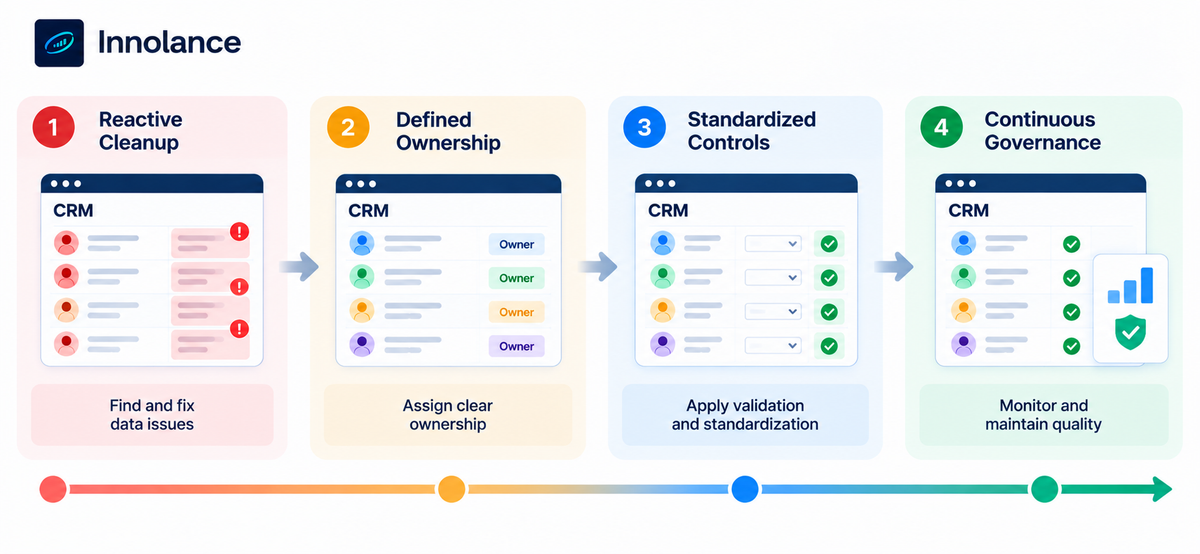
This progression allows RevOps teams to shift from repeatedly repairing CRM data toward maintaining quality as part of everyday operations.
What CRM Data Quality Signals Should Leaders Monitor?
Governance should be measurable.
RevOps teams can monitor signals such as required-field completion, duplicate rates, formatting inconsistencies, stale records, workflow exceptions, and recurring data-quality issues.
The purpose is not simply to report how many records are clean. These indicators should help leaders identify where CRM processes are creating quality problems and where additional controls are needed.
Over time, this provides greater confidence that CRM data remains reliable as the organization changes.
What Should RevOps Leaders Do Next?
Start by identifying the CRM information that revenue workflows, automation, reporting, and leadership decisions depend on most.
Then evaluate where that information comes from, who owns it, how it is validated, and where quality problems repeatedly occur.
Prioritize the highest-impact gaps first. Establish ownership, standardize definitions, strengthen entry controls, and monitor whether the same issues continue to return.
For scaling CRM processes, governance should become part of how data is created and maintained not a separate cleanup exercise performed after problems appear.
Conclusion
CRM data quality becomes harder to maintain when RevOps growth introduces more users, systems, integrations, and processes without consistent governance.
Data cleansing can correct existing problems, but sustainable CRM data quality depends on addressing the gaps that create them. Clear ownership, standardized definitions, preventive controls, duplicate prevention, and continuous monitoring create a stronger foundation for CRM data integrity.
The goal is not simply a cleaner CRM. It is a governed CRM that remains trustworthy as revenue operations scale.