
The Complete Guide to CRM Change Management
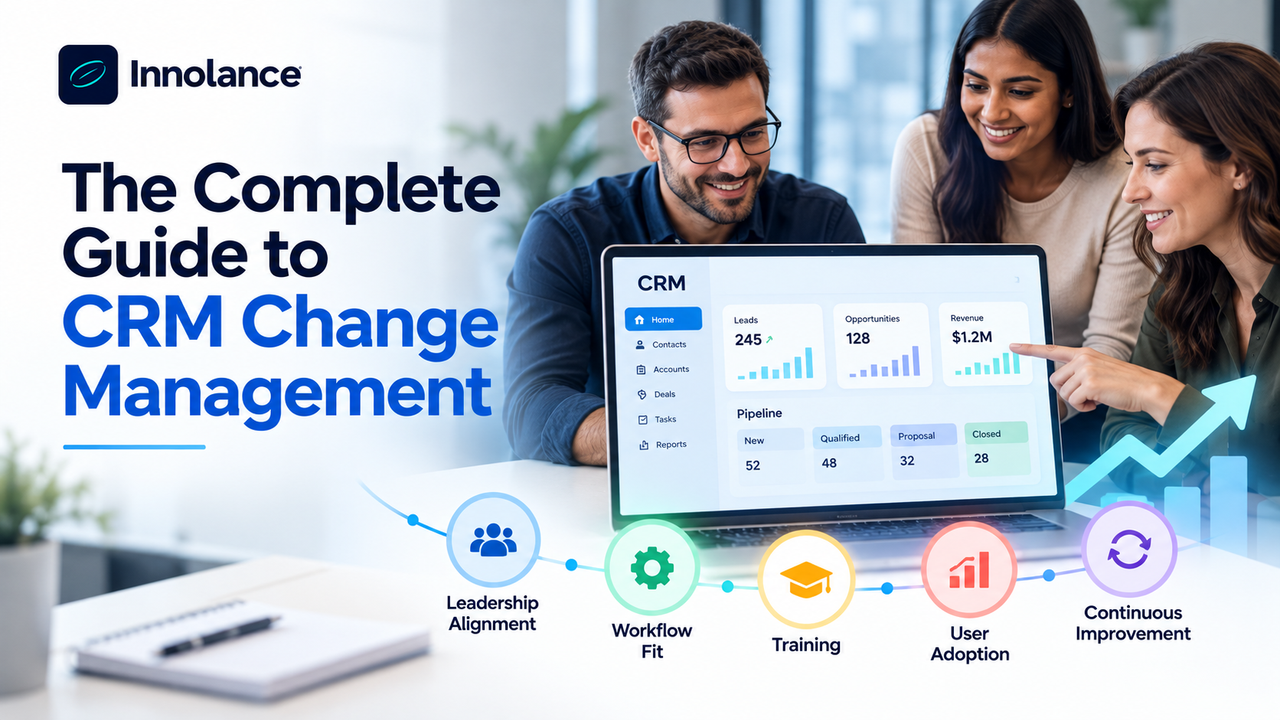
Discover why CRM adoption remains low after implementation and how change management, employee training, and workflow alignment improve long-term usage.
Executive Summary
Implementing a CRM does not automatically guarantee employee adoption. Many B2B organizations invest in Salesforce or HubSpot, configure workflows, and launch dashboards, yet employees continue relying on spreadsheets, manual processes, or disconnected tools.
Low CRM adoption often results from inadequate training, unclear workflow expectations, limited leadership involvement, and resistance to operational changes.
For revenue operations leaders, successful CRM implementation requires more than technical configuration. It requires a structured change management approach that helps employees understand, adopt, and consistently use the system.
Direct Answer: Companies experience low CRM adoption after implementation because employees may not understand the CRM's value, receive sufficient role-specific training, or see how it supports their daily workflows. Organizations can improve adoption through leadership alignment, practical training, workflow optimization, clear ownership, and continuous monitoring of actual CRM usage.
Why Does CRM Adoption Remain Low After Implementation?
CRM adoption measures how consistently employees use a customer relationship management system to complete essential business activities.
A technically successful CRM implementation may still fail to deliver expected business outcomes when employees do not incorporate the platform into their daily work.
Common warning signs include:
- Sales representatives maintaining separate spreadsheets
- Customer records remaining incomplete or outdated
- Employees updating opportunities only before reporting meetings
- Inconsistent use of pipeline stages
- Teams avoiding automated workflows
- Managers questioning CRM reporting accuracy
These problems often indicate a gap between system configuration and operational behavior.
Key Takeaway: CRM implementation delivers the technology, while CRM adoption determines whether employees consistently use it to support business processes.
What Is CRM Change Management?
CRM change management is the structured process of preparing, supporting, and guiding employees through changes to customer management workflows, responsibilities, and technology usage.
It connects system implementation with the organizational changes required for sustained adoption.
An effective approach addresses five connected elements:
- Leadership Alignment: Establish clear expectations and accountability.
- Workflow Fit: Ensure the CRM supports actual business activities.
- Training: Prepare employees to use relevant features confidently.
- User Engagement: Address concerns and encourage participation.
- Continuous Improvement: Monitor usage and refine processes.
Together, these elements help organizations move beyond initial implementation toward consistent CRM usage.
How Does Leadership Alignment Influence CRM Adoption?
Leadership behavior significantly influences whether employees treat the CRM as an essential business system.
When managers rely on spreadsheets or request updates outside the CRM, employees may view the platform as an additional administrative requirement.
Leaders should establish consistent expectations for pipeline reviews, customer updates, forecasting, and reporting.
Managers must also demonstrate how CRM information supports better decisions rather than simply requiring more data entry.
Practical Tip: Use CRM dashboards during regular sales meetings and address missing information through coaching and process improvements.
Are CRM Workflows Aligned With Daily Business Activities?
One of the most common implementation challenges is configuring workflows without fully understanding how employees perform their work.
Complex data-entry requirements, unnecessary fields, disconnected integrations, and excessive manual steps can discourage consistent usage.
Organizations should evaluate whether CRM workflows make essential activities easier or introduce additional administrative work.
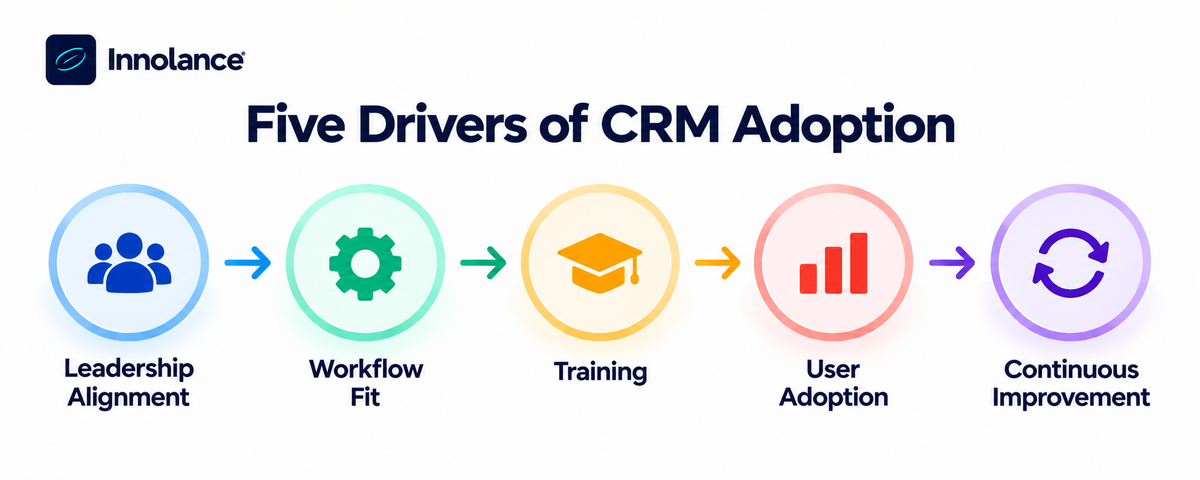
A practical CRM adoption framework connects five stages:
Leadership Alignment → Workflow Fit → Training → User Adoption → Continuous Improvement
For Salesforce and HubSpot teams, this may involve simplifying opportunity updates, improving lead assignment, connecting communication tools, and reducing duplicate entry.
Key Takeaway: Employees are more likely to adopt CRM workflows when those workflows support their responsibilities and reduce unnecessary effort.
Why Is Role-Based CRM Training Important?
Generic onboarding sessions rarely address the different needs of sales representatives, managers, marketing teams, and CRM administrators.
Effective CRM training should focus on the tasks employees perform regularly.
For example:
- Sales Representatives: Lead updates, opportunity management, and customer activity tracking
- Sales Managers: Pipeline reviews, forecasting, and coaching
- Marketing Teams: Lead qualification, campaign attribution, and handoffs
- CRM Administrators: Data governance, automation, permissions, and reporting
Training should include realistic scenarios, practical exercises, and accessible support resources.
Practical Tip: Provide refresher training after major workflow changes rather than limiting education to the initial CRM launch.
How Can Organizations Overcome Resistance to CRM Adoption?
Resistance often develops when employees experience unclear expectations, additional administrative work, or insufficient involvement in implementation decisions.
Organizations should gather feedback to understand why users avoid specific workflows.
Some problems require training, while others require changes to system configuration, data-entry requirements, or integration design.
Involving representatives from different teams in testing and improvement discussions can reveal barriers that technical implementation teams may overlook.
Key Takeaway: Sustainable user adoption improves when organizations address the causes of resistance instead of treating low usage only as an employee performance issue.
Which Metrics Should Leaders Track to Measure CRM Adoption?
CRM adoption should be measured through meaningful business activity rather than login counts alone.
Useful indicators include:
- Active User Rate: Percentage of expected users regularly completing CRM activities
- Opportunity Update Rate: Percentage of active opportunities updated within a defined period
- Required-Field Completeness: Percentage of records containing essential information
- Workflow Completion Rate: Percentage of required CRM processes completed correctly
- Training Completion: Percentage of employees completing role-specific training
- Data Quality Trends: Changes in duplicate records, missing information, and outdated data
These measures help leaders distinguish occasional system access from consistent operational adoption.
How Can Leaders Build a Sustainable CRM Change Management Plan?
Improving CRM adoption requires an ongoing process rather than a one-time implementation activity.
A practical improvement cycle is:
Assess → Align → Train → Adopt → Monitor
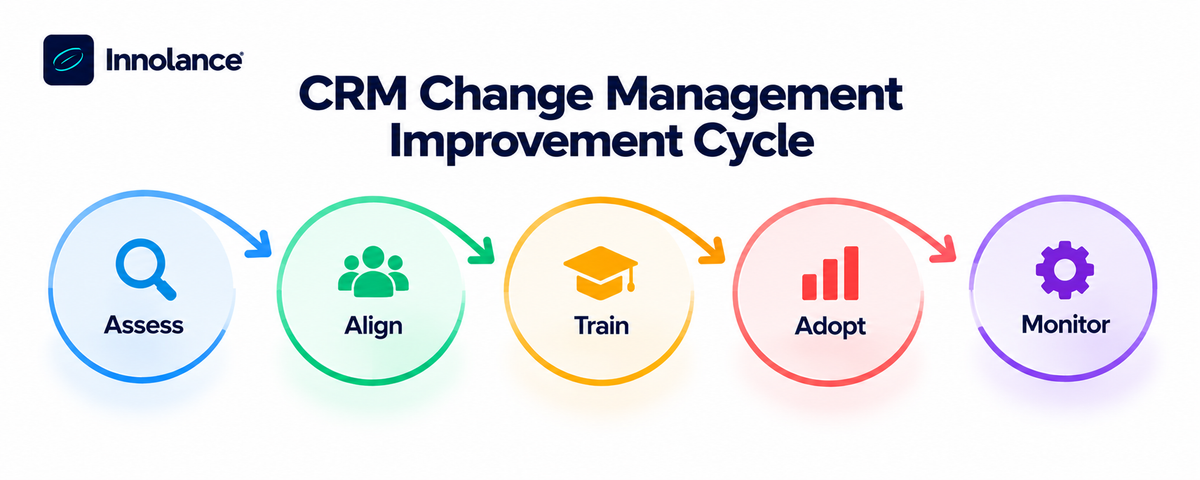
Begin by assessing current CRM usage, employee feedback, and workflow challenges.
Align leadership expectations and simplify processes that create unnecessary friction. Provide targeted training and support employees as they adopt revised workflows.
Finally, monitor adoption metrics, data quality, and user feedback to identify opportunities for improvement.
Key Takeaway: Long-term CRM adoption depends on continuous reinforcement, workflow improvement, and leadership accountability.
What Should B2B Leaders Do Next?
Start by examining one important CRM workflow, such as lead qualification, opportunity management, or sales forecasting.
Compare the intended process with how employees actually complete the work. Identify where manual workarounds, unclear ownership, training gaps, or unnecessary system complexity reduce adoption.
For Salesforce and HubSpot organizations, improving adoption often requires evaluating technology configuration alongside employee workflows and operational responsibilities.
Innolance helps organizations examine CRM processes, data quality, integrations, and adoption challenges to identify gaps between system capabilities and everyday business execution. This diagnostic approach supports practical improvements that can strengthen CRM usage and reporting reliability.
Frequently Asked Questions
Why do companies experience low CRM adoption after implementation?
Low CRM adoption often results from insufficient training, complex workflows, unclear expectations, limited leadership support, and employees continuing to use familiar manual processes.
How does change management improve CRM adoption?
Change management helps organizations align leadership, prepare employees, simplify workflows, deliver role-specific training, and reinforce consistent CRM usage.
Is CRM training enough to improve user adoption?
Training is important, but it cannot independently resolve poorly designed workflows, inconsistent leadership expectations, or unnecessary administrative requirements.
How can companies measure successful CRM adoption?
Organizations should monitor meaningful CRM activities, opportunity updates, data completeness, workflow completion, and employee engagement rather than relying exclusively on login rates.
Conclusion
Successful CRM adoption requires more than implementing Salesforce, HubSpot, or another CRM platform.
Without effective change management, employees may continue using disconnected tools, creating incomplete records and weakening reporting reliability.
By aligning leadership, improving workflow fit, delivering practical training, addressing adoption barriers, and continuously monitoring usage, B2B organizations can build stronger CRM practices that support long-term operational performance.