
The Complete Guide to Process Bottlenecks in 2026
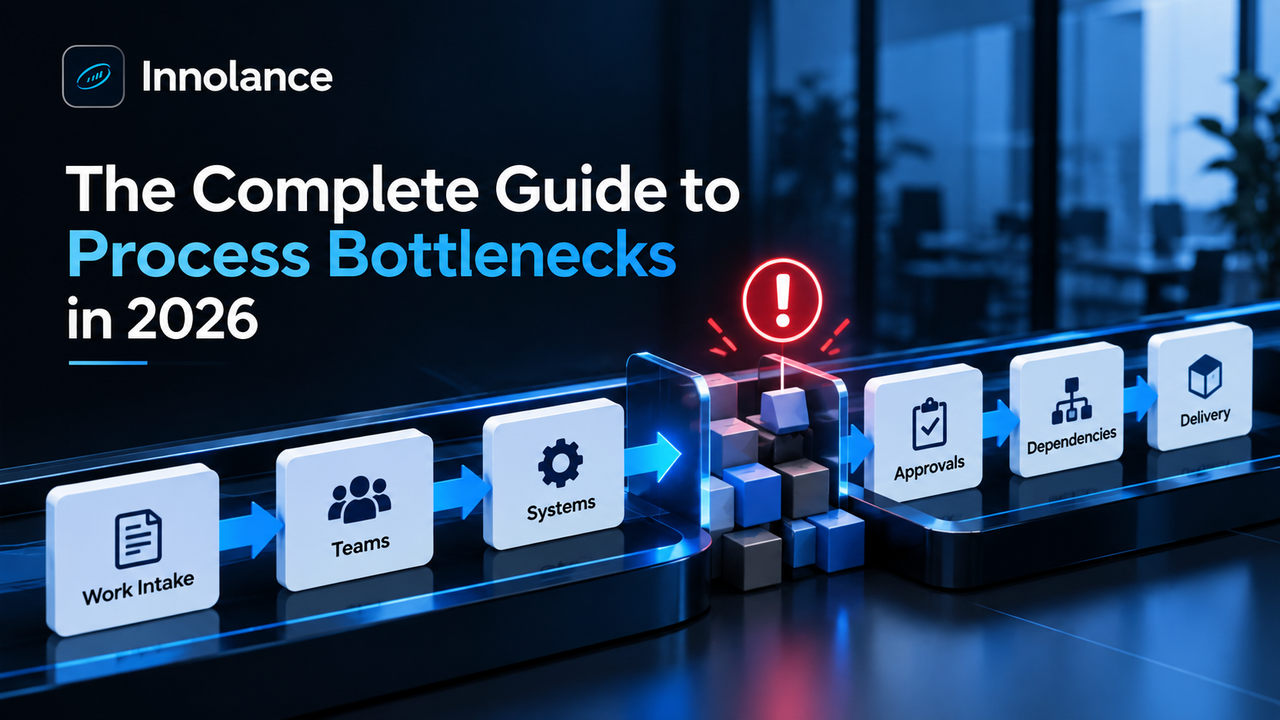
Learn how leaders can uncover process bottlenecks across teams, systems, dependencies, and approvals using execution bottleneck analysis.
Executive Summary
Process bottlenecks rarely begin as obvious failures. They often develop gradually as organizations scale, adding more teams, systems, dependencies, approvals, and handoffs to everyday execution.
For CTOs, COOs, product leaders, and operations leaders, effective execution bottleneck analysis means identifying where work slows, why it slows, and how that constraint affects downstream delivery. Instead of reacting only after deadlines slip, leaders can examine workflow signals, decision delays, dependencies, capacity, and process friction to identify problems earlier.
Direct Answer: The best way to uncover execution bottlenecks is to trace work across teams, systems, and approvals, identify where flow repeatedly slows or stops, and validate those constraints using operational signals such as wait time, cycle time, blocked work, handoff delays, and decision latency.
What Are Process Bottlenecks?
A process bottleneck is a point in a workflow where work accumulates, slows down, or repeatedly waits because demand exceeds the ability of that stage to process it effectively.
In growing software organizations, bottlenecks can appear almost anywhere: an overloaded team, a manual approval, a cross-team dependency, a disconnected system, or a decision that requires repeated escalation.
The challenge is that the visible delay may not be the actual constraint. A delivery team may appear slow, for example, when work is actually waiting upstream for requirements, approvals, or another team's dependency.
Key Takeaway: Diagnose the flow of work before assuming the team closest to the delay is causing it.
Where Should Leaders Look for Execution Bottlenecks?
Effective execution bottleneck analysis should examine the complete path from commitment to delivery.
Leaders should look for work that repeatedly waits between teams, approvals that remain open longer than expected, dependencies that frequently block progress, overloaded workflow stages, and information that must be manually transferred between systems.
A useful diagnostic sequence is:
Work Intake → Handoffs → Dependencies → Decisions → Delivery
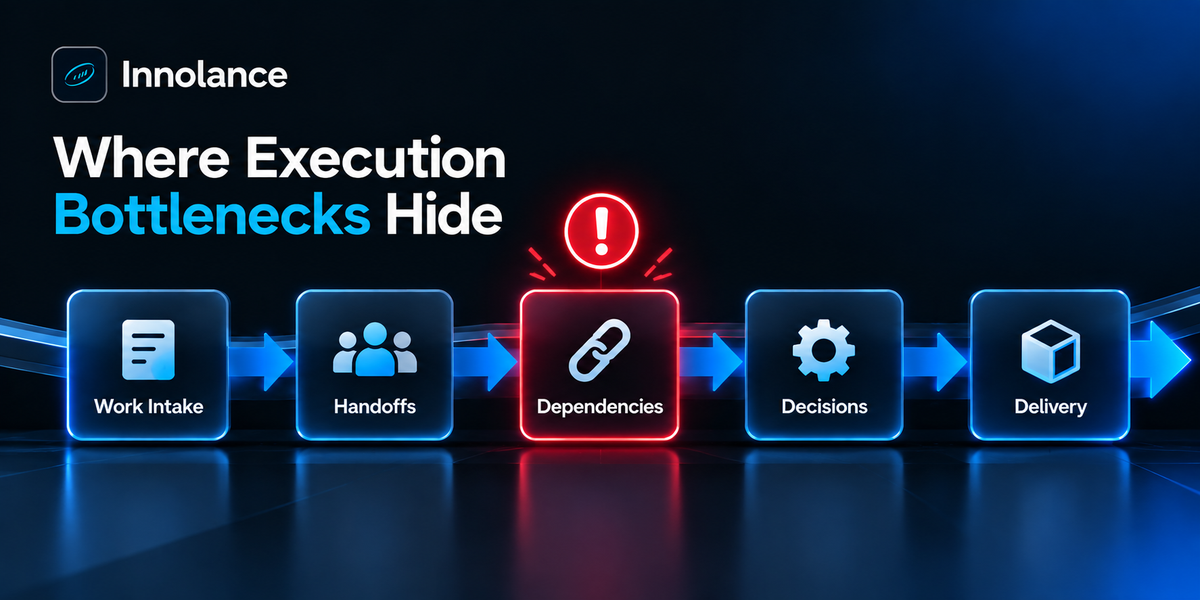
Looking across the entire flow makes it easier to distinguish isolated problems from recurring organizational constraints.
Which Operational Signals Reveal Bottlenecks?
Bottlenecks become easier to diagnose when leaders combine workflow observation with measurable operational signals.
Useful indicators include cycle time, lead time, work in progress, blocked-work duration, approval wait time, dependency delays, and decision velocity. Repeated increases in these signals can show where execution is losing momentum.
For example, increasing cycle time may indicate overloaded workflow stages, while long approval wait times may reveal a decision bottleneck rather than a delivery-capacity problem.
Practical Tip: Don't evaluate one metric in isolation. Look for recurring patterns across workflow stages and teams.
Why Do Bottlenecks Become Harder to See as Companies Scale?
Growth increases execution complexity.
More teams create more handoffs. More systems create more fragmented information. More dependencies increase coordination requirements. Additional management layers can introduce longer decision paths.
As a result, individual teams may appear productive while the overall organization becomes slower.
This is where **Execution Clarity the ability to understand where execution is breaking down and why **becomes important. It gives leaders a shared view of how planning, dependencies, decisions, and team execution interact instead of treating every slowdown as an isolated performance problem.
How Should Leaders Analyze the Root Cause?
Finding a slow workflow stage is only the beginning. Leaders must determine why the constraint exists.
A practical analysis can examine five connected areas:
Capacity → Dependencies → Decision Flow → Process Design → System Friction
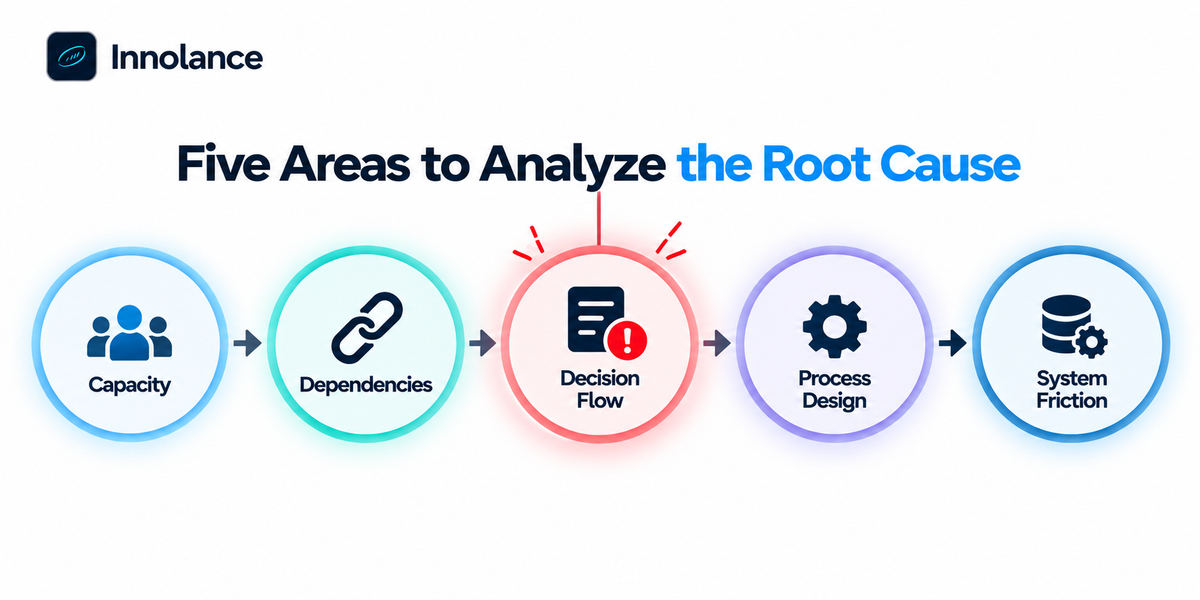
Capacity problems may require workload adjustments. Dependency problems may require better sequencing and ownership. Decision bottlenecks may require clearer decision rights. Process friction may require fewer approvals or handoffs, while system friction may require workflow integration or automation.
The intervention should address the constraint rather than simply adding more process around it.
How Can Organizations Improve Workflow Efficiency?
Once the root cause is understood, workflow optimization should focus on removing the specific friction limiting flow.
That might mean reducing unnecessary approvals, clarifying ownership, limiting work in progress, restructuring handoffs, automating repetitive workflows, or making dependencies visible earlier.
After making a change, leaders should measure the same operational signals again. If cycle time, waiting time, or blocked work improves, the organization has evidence that the intervention addressed the constraint.
This creates a continuous improvement cycle:
Diagnose → Prioritize → Improve → Measure → Repeat
What Should Leaders Do Next?
Start with one important workflow where delivery is repeatedly unpredictable.
Map how work enters the system, which teams touch it, where approvals occur, which dependencies exist, and where work spends the most time waiting. Then compare those observations with operational data.
Innolance approaches this challenge through Execution Clarity, helping organizations identify where execution friction exists across leadership, planning, and delivery rather than treating bottlenecks as isolated team problems. This provides a stronger foundation for targeted execution improvement and more predictable delivery.
Conclusion
Process bottlenecks are rarely solved simply by asking teams to work faster. Sustainable improvement starts by understanding where work is constrained and why.
In 2026, effective execution bottleneck analysis requires leaders to connect workflow behavior with operational signals across teams, systems, dependencies, and decisions. By diagnosing the underlying constraint before changing the process, organizations can improve operational efficiency, strengthen execution, and create a more predictable path from commitment to delivery.