
What Causes Unpredictable Software Delivery?

Discover the hidden planning, workflow, dependency, and risk signals that cause unpredictable software delivery before timelines begin to slip.
Executive Summary
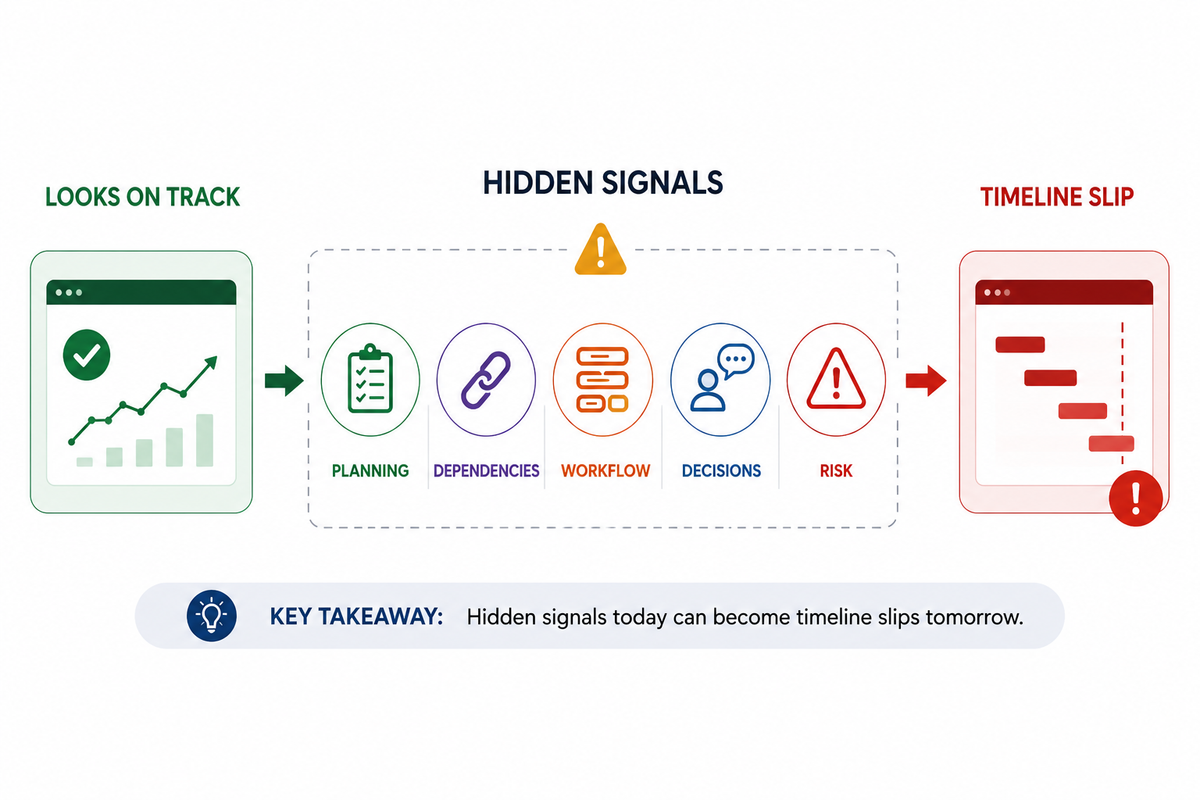
Software delivery rarely becomes unpredictable at the moment a deadline slips. Warning signs usually appear earlier through unstable plans, unresolved dependencies, workflow bottlenecks, delayed decisions, and risks that remain hidden until they affect delivery.
For CTOs, COOs, VPs of Engineering, and delivery leaders, improving software delivery predictability requires looking beyond whether projects appear “on track.” Leaders need visibility into the conditions that could disrupt execution before roadmap commitments are affected.
Direct Answer: Unpredictable software delivery is often caused by planning instability, hidden dependencies, workflow bottlenecks, delayed decisions, and weak risk visibility. Traditional status reporting may not expose these conditions until timelines begin to slip.
How Does Planning Instability Affect Predictability?
Agile planning requires enough stability for teams to make meaningful commitments while remaining flexible when priorities change.
Predictability deteriorates when priorities repeatedly shift after work begins, scope changes without capacity adjustments, or commitments are made without understanding dependencies and constraints.
The problem is not change itself. It is change without visibility into its impact on execution.
Practical Tip: Track commitment changes alongside delivery progress. Frequent changes can provide an earlier warning than a missed deadline.
How Do Workflow Bottlenecks Create Delivery Risk?
Delivery becomes unpredictable when work enters the software development lifecycle faster than it can move through it.
Development may progress quickly while testing, review, security approval, or deployment becomes constrained. Growing work in progress, longer cycle times, repeated carryover, and approval queues can reveal problems before they become roadmap delays.
These signals provide a stronger view of delivery reliability than activity alone.
Why Do Dependencies and Decisions Create Uncertainty?
Modern software delivery involves product, engineering, security, infrastructure, operations, and leadership. Dependencies across these groups can introduce uncertainty when they are not visible or actively managed.
Decision delays create similar problems. When ownership is unclear or approvals take too long, teams wait, make assumptions, or rework completed activities.
A useful risk assessment should therefore consider technical risk alongside dependencies, decision delays, capacity constraints, and planning instability.
How Can Leaders Diagnose Unpredictable Delivery?
Leaders should compare what plans say should happen with what execution signals show is actually happening.
Ask:
- Are commitments frequently changing?
- Where is work waiting?
- Which dependencies repeatedly delay progress?
- How quickly are critical decisions made?
- Are risks visible before milestones slip?
These questions move leadership conversations from “Are we on track?” to “What could prevent us from staying on track?”
How Does Execution Clarity Improve Delivery Predictability?
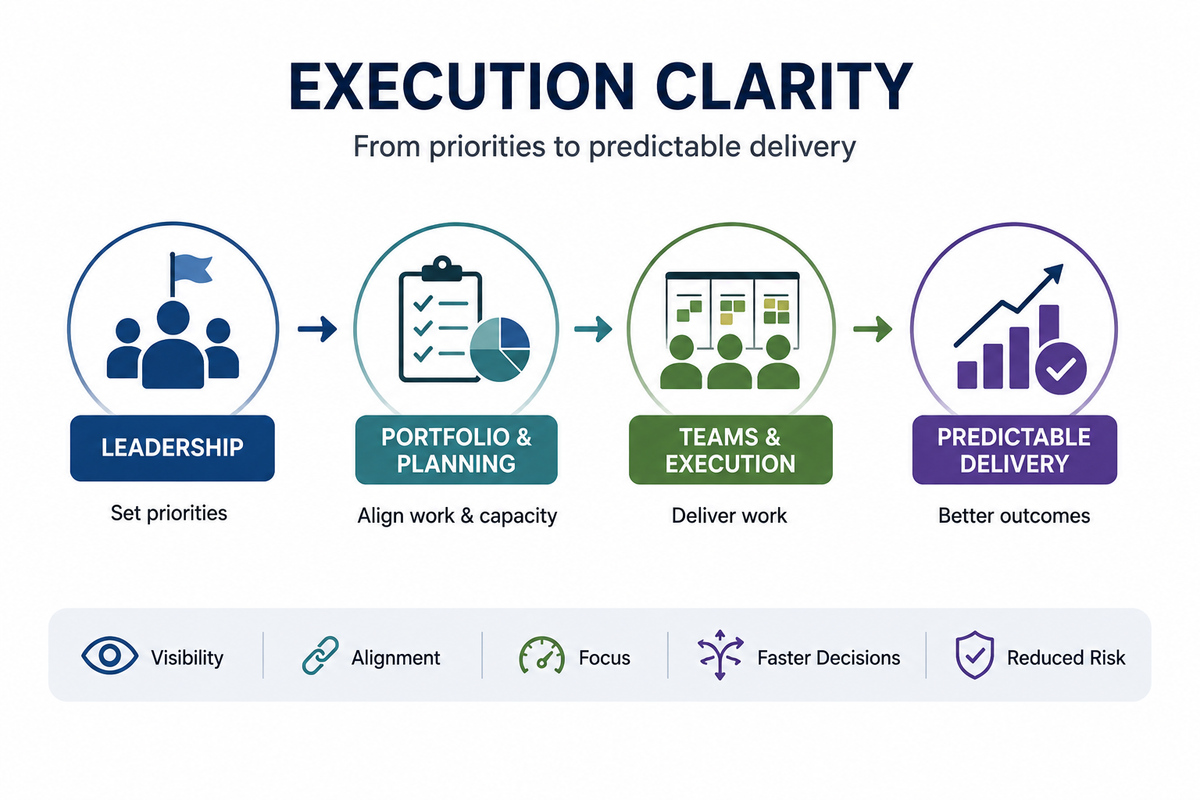
Execution Clarity the ability to understand where execution is breaking down and why helps leaders identify bottlenecks earlier, strengthen alignment, and make informed decisions before delivery is impacted.
It connects signals across leadership priorities, portfolio planning, and team execution, helping leaders see where commitments, dependencies, capacity, decisions, and workflow conditions are beginning to diverge.
What Should Leaders Measure?
No single metric explains predictability. Leaders should combine indicators such as Commitment Reliability, Lead Time, Cycle Time, Work in Progress, Decision Velocity, and Roadmap Health.
The goal is not another dashboard. It is understanding how signals relate. Rising cycle time and work in progress may indicate a workflow constraint, while declining commitment reliability alongside frequent priority changes can reveal planning instability.
What Should Leaders Do Next?
When delivery becomes unpredictable, adding more meetings or reporting should not automatically be the first response.
Start by identifying where work waits, commitments change, dependencies create delays, and decisions slow execution. Connect those signals across leadership, planning, and delivery.
Predictable delivery starts with Execution Clarity.
Conclusion
Unpredictable software delivery rarely comes from one failure. It develops as planning changes, dependencies accumulate, workflows slow, decisions wait, and risks remain hidden.
Improving software delivery predictability means making those signals visible early enough for leaders to act before uncertainty becomes another missed commitment.