
When Sales Commission Spreadsheets Stop Scaling: 6 Problems to Fix Before You Automate

Learn why sales commission spreadsheets stop scaling and the six operational problems growing teams should fix before automating commission processing.
Executive Summary
Sales commission spreadsheets often work when compensation plans, teams, and payout rules are relatively simple. As organizations grow, additional plans, recipients, systems, splits, accelerators, clawbacks, exceptions, and adjustments can turn a familiar spreadsheet into a fragile operating process.
The spreadsheet itself is usually only the visible problem. Slow reconciliation, recurring disputes, manual adjustments, and multiple versions of compensation data can indicate deeper issues with plan logic, source data, ownership, testing, and payout visibility.
Direct Answer: Commission automation works best when the process being automated is clearly defined. Before implementing Salesforce Spiff, growing companies should stabilize six areas: commission plan rules, source data, exceptions, ownership, reconciliation, and user readiness. This creates a stronger foundation for accurate commission processing and a first Spiff payout cycle the organization can run with confidence.
Why Do Sales Commission Spreadsheets Stop Scaling?
The problem is rarely Excel or Google Sheets alone.
As the number of commission recipients, compensation plans, data sources, and exceptions increases, manual workflows become harder to maintain. Warning signs can include longer reconciliation cycles, frequent adjustments, payout disputes, multiple spreadsheet versions, and dependence on one person who understands the calculations.
Before replacing the spreadsheet, leaders should diagnose the operating process behind it.
Key Takeaway: Automating an unclear commission process does not automatically make its rules, data, or responsibilities clear.
1. Are Commission Plan Rules Clearly Defined?
Commission plans often accumulate complexity over time.
Accelerators, splits, thresholds, clawbacks, recurring commissions, and special exceptions may be understood by the spreadsheet owner without being consistently documented.
Spiff can automate commission calculations using configured payout rules, but organizations still need to determine what those rules should be and when they apply.
Document each compensation rule, its effective period, calculation logic, and exceptions before configuration begins.
2. Is the Source Data Reliable?
Automation depends on trustworthy inputs.
Leaders should identify where bookings, opportunities, quotas, employee information, territories, and adjustments originate. They should also determine which system owns each field and how that information reaches the commission process.
Practical Tip: Trace several completed payouts back to their source records. If the team cannot consistently explain where the inputs originated, address the data problem before automating calculations.
3. Are Commission Exceptions Documented?
Manual spreadsheets frequently contain workarounds that gradually become part of the commission process.
Split deals, special territory arrangements, one-time adjustments, clawbacks, and other exceptions may be handled differently each month.
Create an exception inventory and determine which cases represent actual compensation rules and which are temporary adjustments.
This prevents undocumented spreadsheet logic from being transferred into a new system without review.
4. Is Ownership Clear Across Finance and Sales Operations?
Who approves compensation-rule changes? Who corrects source data? Who investigates discrepancies? Who signs off on the final payout?
When ownership is unclear, commission processing can slow down even after automation is introduced.
Growing organizations should establish clear responsibilities across Finance, Revenue Operations, Sales Operations, and compensation administrators.
Key Takeaway: Commission automation requires decision ownership as much as technical configuration.
5. Can Historical Payouts Be Reconciled?
Before trusting an automated commission process, teams need evidence that its calculations match agreed compensation rules.
Historical payout data provides an important testing foundation. Teams should determine which historical periods and records are needed, establish expected results, and define how differences will be investigated and approved.

Testing this cycle before the first live payout can expose missing data, misunderstood rules, or unexpected exceptions while there is still time to correct them.
6. Are Administrators and Sales Reps Ready?
A technically correct implementation can still create confusion if administrators cannot maintain the setup or sales representatives do not understand their payouts.
Before launch, define administrator responsibilities, escalation procedures, user training, and how payout questions will be handled.
Clear payout visibility can also reduce the time teams spend explaining calculations and investigating avoidable disputes.
Why Is Q4 a Good Time to Review Commission Operations?
For companies whose compensation planning follows the calendar year, Q4 provides a useful opportunity to review commission operations before new plans take effect.
Instead of carrying existing spreadsheet logic into another year, leaders can identify which rules generated manual work, which data required repeated corrections, which exceptions created disputes, and which responsibilities remained unclear.
That review can also help teams prepare compensation requirements and testing scenarios before implementing or expanding Spiff.
What Should Be Ready Before Your First Spiff Payout?
A practical readiness checklist includes:
Ownership → Plan Logic → Source Data → Historical Data → Reconciliation → User Readiness
Innolance's Spiff implementation approach focuses on these operational foundations alongside configuration, data mapping, historical-data preparation, reconciliation testing, training, and launch support.
The objective is not simply to replace a spreadsheet. It is to establish a commission process that teams can understand, test, approve, and operate with confidence.
What Should Leaders Do Next?
Start with one recent commission cycle.
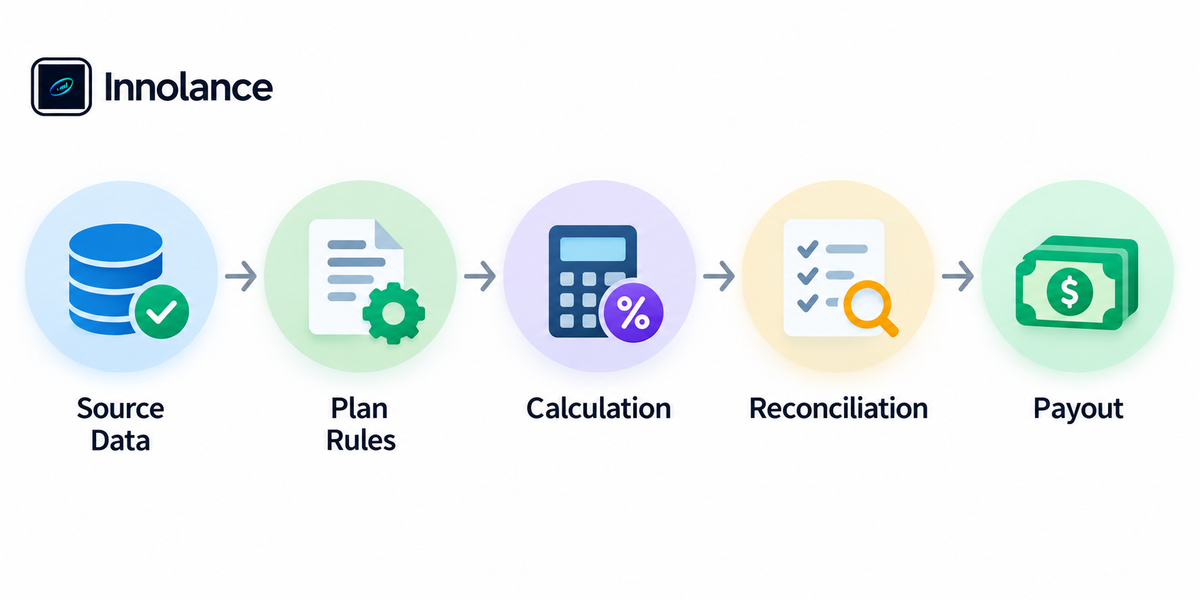
Trace it from source data through plan rules, exceptions, calculations, reconciliation, approval, and final payout. Document where manual intervention, disagreement, or uncertainty occurs.
Those gaps provide a practical starting point for determining what should be clarified before automation.
See what should be ready before your first Spiff payout:
Conclusion
When sales commission spreadsheets stop scaling, the spreadsheet is often only the visible problem.
Unclear rules, unreliable data, undocumented exceptions, fragmented ownership, reconciliation gaps, and limited user readiness can continue creating problems after new software is introduced.
By stabilizing these six areas first, growing companies can approach Spiff implementation with clearer requirements and a stronger foundation for accurate, transparent, and more manageable commission payouts.