
Why Execution Gets Harder as Companies Scale in 2026
Learn why execution becomes harder as organizations scale and how improving Execution Clarity helps leaders reduce bottlenecks and achieve more predictable delivery.
Why Execution Gets Harder as Companies Scale in 2026
Executive Summary
As organizations grow, execution becomes more difficult because complexity increases faster than coordination. More teams, products, and priorities create hidden dependencies that reduce visibility and make delivery less predictable. Execution Clarity the ability to understand where execution is breaking down and why helps leaders identify bottlenecks earlier, strengthen alignment, and make more informed decisions before delivery is impacted.
Why Does Execution Become Harder as Companies Scale?
Many organizations invest in Agile practices, AI tools, and modern delivery platforms expecting execution to improve as they grow. Yet delivery delays, shifting priorities, and missed roadmap commitments remain common.
The challenge is rarely individual team performance. Instead, growth introduces organizational complexity that makes it harder to understand how work flows across teams. As dependencies increase and communication becomes more fragmented, leaders lose visibility into execution, making risks more difficult to identify before they affect delivery.
Why Does Organizational Complexity Create Execution Bottlenecks?
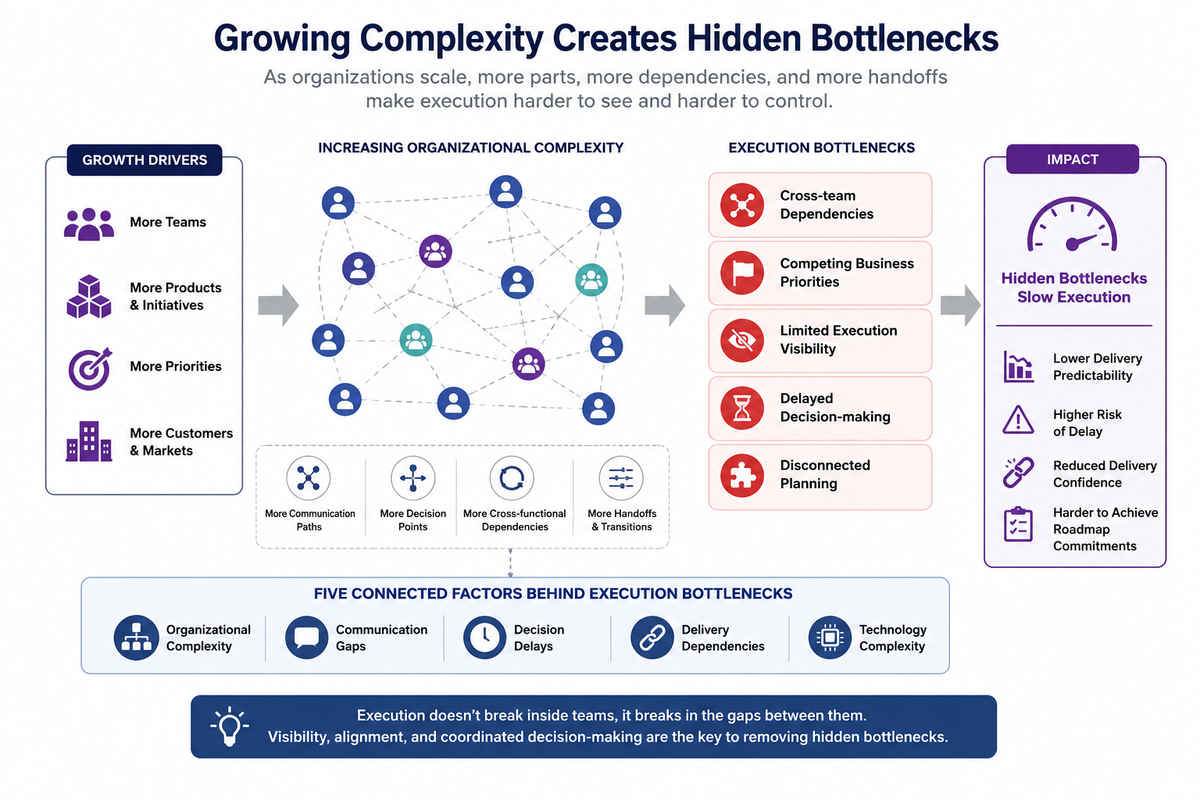
As organizations scale, coordination becomes increasingly challenging. New teams, products, and initiatives create more communication paths, decision points, and cross-functional dependencies. While individual teams may perform well, work often slows between teams rather than within them.
Execution bottlenecks typically result from five connected factors: organizational complexity, communication gaps, decision delays, delivery dependencies, and technology complexity. Together, these factors reduce visibility, slow coordination, and make predictable delivery more difficult as organizations grow.
Common contributors to execution bottlenecks include:
- Cross-team dependencies
- Competing business priorities
- Limited execution visibility
- Delayed decision-making
- Disconnected planning
Rather than isolated productivity issues, these organizational constraints reduce delivery confidence and make roadmap commitments harder to achieve.
How Does Execution Visibility Improve Predictable Delivery?
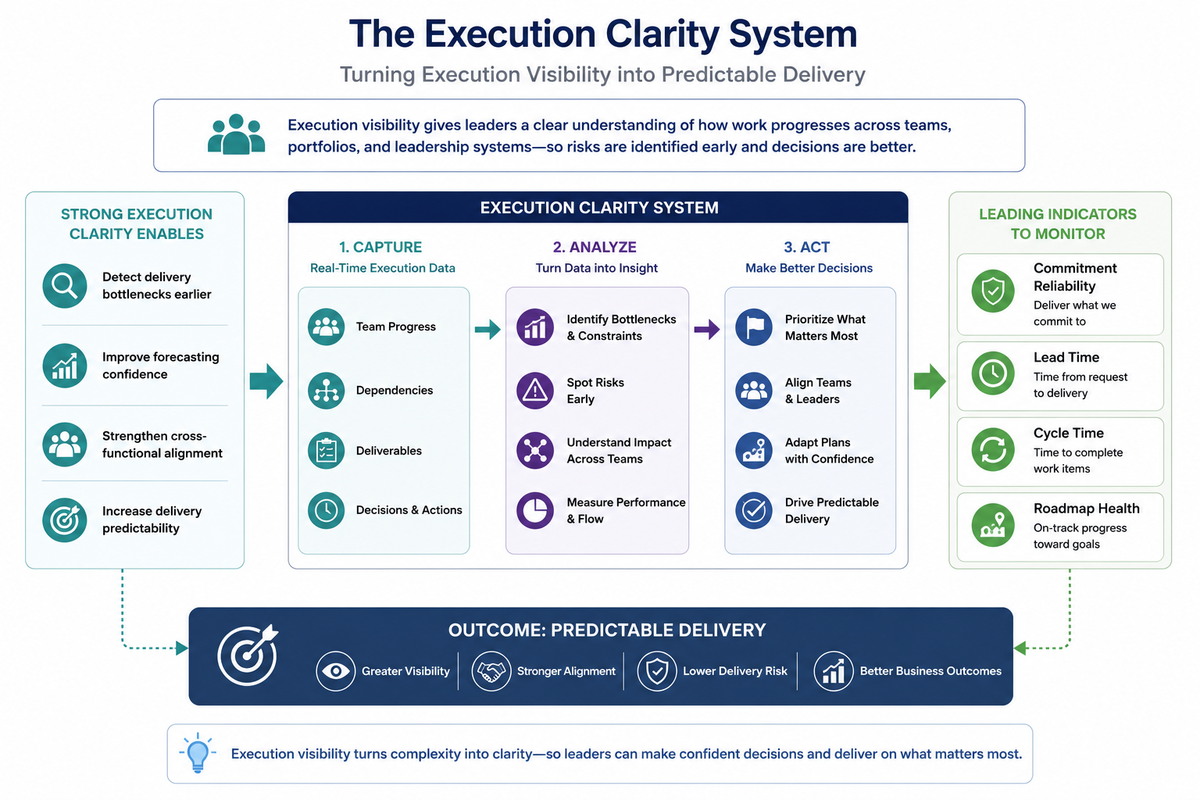
Execution visibility gives leaders a clear understanding of how work progresses across teams, portfolios, and leadership systems. Instead of reacting to delays after they occur, organizations can identify risks earlier and make informed decisions based on objective insights.
Organizations with strong Execution Clarity can:
- Detect delivery bottlenecks earlier.
- Improve forecasting confidence.
- Strengthen cross-functional alignment.
- Increase delivery predictability.
Organizations can monitor leading indicators such as Commitment Reliability, Lead Time, Cycle Time, and Roadmap Health to identify execution risks before they affect delivery commitments
How Innolance Helps Improve Execution Clarity
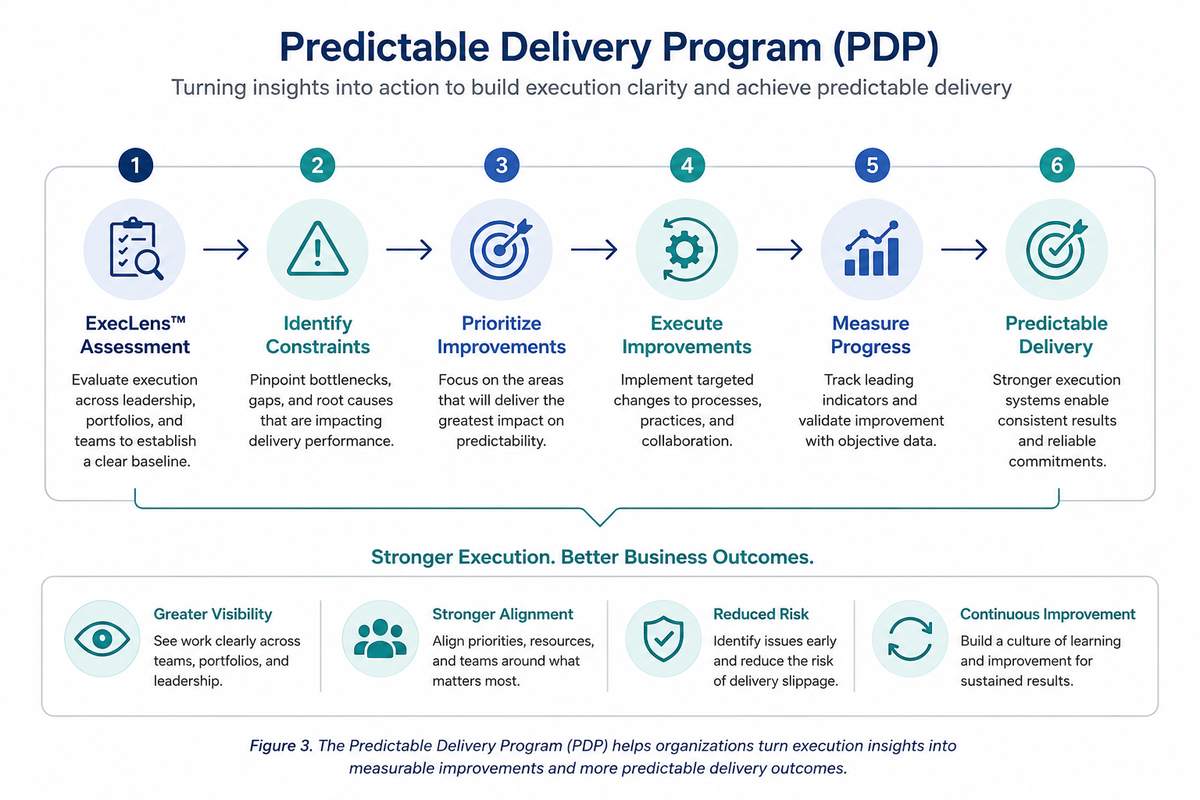
Improving execution begins with understanding where constraints exist. Rather than focusing only on project status, Innolance helps organizations improve Execution Clarity by evaluating how work flows across leadership, portfolios, and delivery teams.
Through ExecLens™, organizations assess Delivery Execution Clarity, Operational Execution Clarity, and Strategic Execution Clarity to identify the organizational factors affecting delivery performance. These insights help leadership teams prioritize meaningful improvements and build stronger execution systems that support predictable delivery.
Conclusion
Execution becomes harder as companies scale because organizational complexity grows faster than coordination and visibility. The most successful organizations recognize that delivery challenges are rarely caused by individual teams alone they result from hidden dependencies, fragmented planning, and limited insight into how work moves across the organization.
By Execution Clarity the ability to understand where execution is breaking down and why helps leaders identify bottlenecks earlier, strengthen alignment, and make informed decisions before delivery is impacted.