
Why Green Projects Miss Software Delivery Dates

Learn why green project status can hide growing delivery risk and how leaders can diagnose execution signals earlier to improve software delivery predictability.
Executive Summary
Software projects can remain green on status reports while delivery risk quietly increases. Milestones may appear achievable and teams may report steady progress even as dependencies, decision delays, scope changes, and unfinished work make the delivery date increasingly uncertain.
For CTOs, VP Engineering, and software delivery leaders, improving software delivery predictability requires looking beyond status colors. Leaders need visibility into the execution signals that indicate whether commitments remain realistic.
Direct Answer: Green projects miss software delivery dates because status reports often reflect completed work and current milestones rather than emerging execution risk. Leaders can diagnose unpredictable delivery earlier by monitoring dependency delays, blocked work, cycle time, scope changes, decision latency, and commitment reliability.
Why Can a Green Project Still Be at Risk?
Green status usually answers a narrow question: Is the project currently within the plan?
It may not reveal whether the remaining work can still be delivered predictably.
A project can appear healthy while critical dependencies remain unresolved, decisions wait for approval, scope expands, or work accumulates late in the development process. These conditions may remain hidden until the delivery date becomes difficult to recover.
Key Takeaway: Project status reflects the current reporting position. Delivery predictability depends on the conditions affecting future execution.
Are Teams Measuring Progress or Delivery Confidence?
Completed stories, sprint velocity, milestone percentages, and utilization provide useful information about software development processes, but they do not independently confirm that a delivery commitment will be met.
Leaders should connect progress metrics with signals showing whether remaining work is becoming easier or harder to deliver.
A useful diagnostic sequence is:
Progress → Flow → Dependencies → Decisions → Delivery
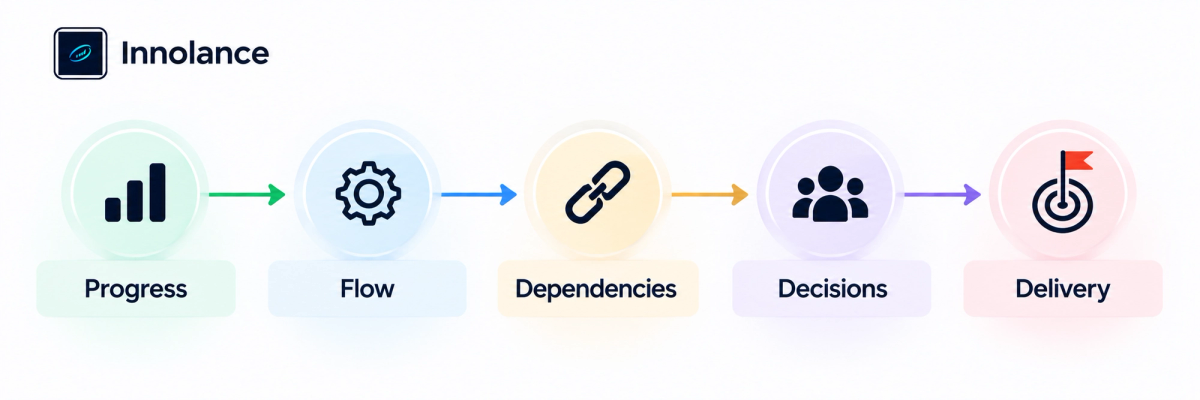
Looking across this execution path helps leaders distinguish reported progress from genuine delivery confidence.
Which Signals Reveal Delivery Risk Earlier?
Effective software delivery diagnosis depends on leading indicators rather than waiting for a milestone to slip.
Useful signals include cycle time, lead time, blocked-work duration, work in progress, dependency age, decision velocity, scope volatility, and Commitment Reliability.
For example, increasing cycle time can indicate growing execution friction even when velocity remains stable. Longer blocked-work duration may reveal dependencies that have not yet affected the published schedule.
Practical Tip: Do not evaluate one metric in isolation. Look for recurring changes across several execution signals.
Are Hidden Dependencies Making Delivery Unpredictable?
Modern software delivery frequently crosses teams, platforms, systems, vendors, and business functions.
An engineering team can appear on track while waiting for another team’s API, infrastructure change, security approval, or product decision. Local performance remains green while overall project delivery risks increase.
Leaders should identify critical dependencies, establish clear ownership, and track how long unresolved dependencies remain open.
Why Do Status Reports Detect Risk Too Late?
Status reports often rely on lagging indicators and subjective confidence.
As organizations scale, additional teams, technologies, handoffs, and approvals make execution harder to understand through a single status indicator.
Execution Clarity the ability to understand where execution is breaking down and why helps leaders identify bottlenecks earlier, strengthen alignment, and make informed decisions before delivery is impacted.
Instead of asking only whether a project is green, leaders should ask what evidence supports the delivery forecast and what emerging conditions could change it.
How Can Leaders Improve Delivery Forecasting?
Better delivery forecasting combines planned commitments with observed execution behavior.
A practical improvement cycle is:
Observe → Diagnose → Forecast → Act → Measure
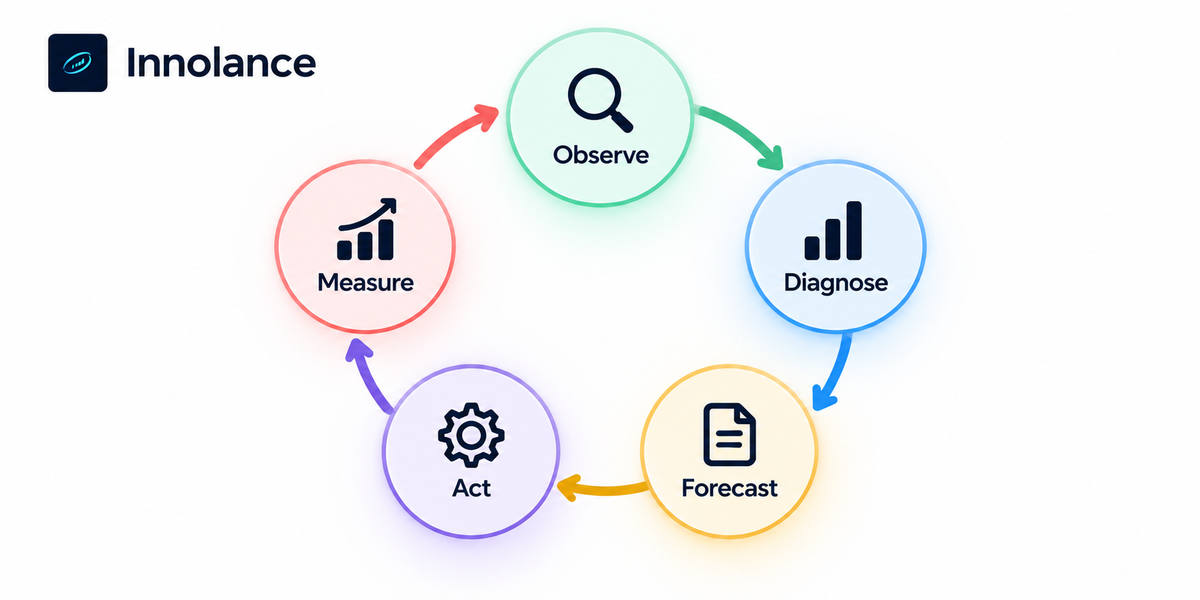
Leaders can observe execution signals, diagnose emerging constraints, update forecasts using current conditions, address the highest-risk constraint, and measure whether delivery stability improves.
This turns forecasting into an evidence-based process instead of a periodic status exercise.
What Should Leaders Do Next?
Start with one project that remains green but has declining delivery confidence.
Compare its status report with actual execution signals. Review blocked work, dependencies, decision delays, scope changes, cycle time, and Commitment Reliability. Identify where the largest gap exists between reported progress and execution reality.
Innolance approaches software delivery diagnosis through Execution Clarity, helping leaders identify where execution is breaking down across planning, dependencies, decisions, and delivery. This provides a stronger foundation for improving software delivery predictability.
Conclusion
Green status does not guarantee predictable delivery.
Software projects miss dates when emerging execution risks remain hidden behind progress metrics until they become delivery problems.
By combining traditional project tracking with leading indicators across flow, dependencies, decisions, and commitments, leaders can identify unpredictable delivery earlier, strengthen delivery forecasting, and make informed decisions before roadmap commitments slip.