Why Sales and Marketing Use Different CRM Data

Learn why sales and marketing use different CRM data and how shared definitions, integrated workflows, and governance can improve data alignment.
Executive Summary
Sales and marketing teams often work within the same CRM ecosystem but still see different versions of the customer. Marketing may focus on leads, campaigns, engagement, and attribution, while sales relies on accounts, opportunities, pipeline stages, and revenue.
As organizations grow, differences in definitions, workflows, ownership, integrations, and data-entry practices can create CRM data silos and weaken sales and marketing CRM data alignment.
Direct Answer: Sales and marketing often operate on different CRM data because they use different definitions, workflows, systems, ownership rules, and reporting logic. Revenue operations leaders can improve alignment by standardizing shared definitions, connecting customer data, clarifying governance, and creating workflows that maintain consistent information across the customer lifecycle.
Why Do Sales and Marketing See Different CRM Data?
The problem usually begins before information reaches a dashboard.
Marketing platforms may create and enrich leads based on campaigns and engagement. Sales teams may update accounts and opportunities based on conversations and pipeline activity. When these processes use different fields, definitions, or synchronization rules, each team develops a different view of the customer.
The CRM may contain all the information while still failing to provide a consistent shared picture.
Key Takeaway: CRM alignment requires more than storing data in one platform. Teams must agree on what the data means and how it should move between workflows.
Do Sales and Marketing Use the Same Definitions?
One of the first checks should be whether both teams define important customer stages consistently.
Terms such as qualified lead, target account, opportunity, pipeline, and customer may have different meanings across teams.
A useful alignment sequence is:
Lead → Qualification → Account → Opportunity → Customer
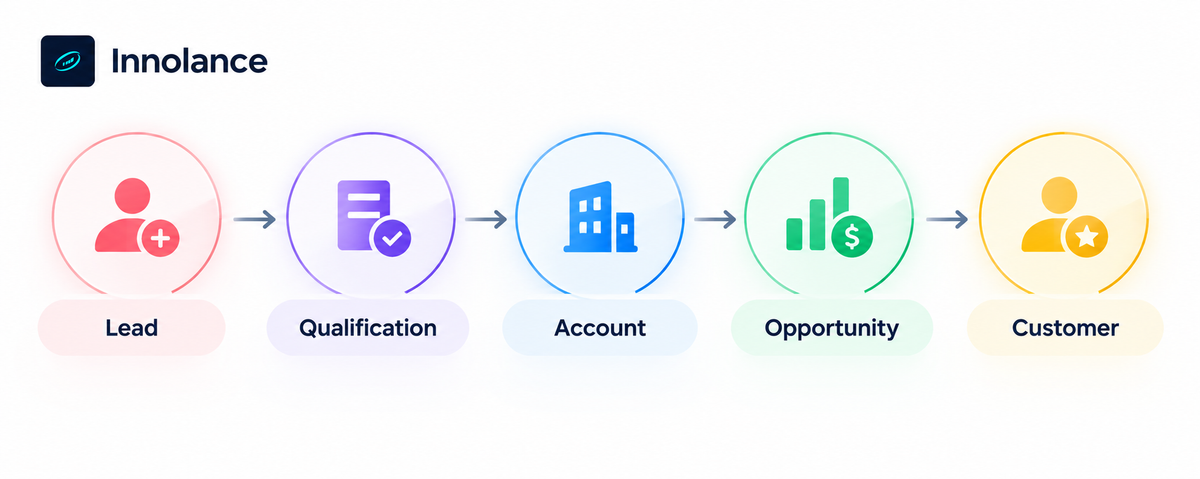
When definitions differ, sales and marketing alignment weakens because teams may interpret the same CRM records differently.
Are Disconnected Systems Creating CRM Data Silos?
Growing organizations frequently connect CRM platforms with marketing automation, advertising, enrichment, sales engagement, customer success, and analytics tools.
These systems can improve capabilities while also creating duplicate records, synchronization delays, conflicting values, and fragmented customer histories.
Effective customer data integration requires leaders to identify which system creates each data point, which systems can modify it, and which platform serves as the source of truth.
Practical Tip: Trace one customer record across marketing and sales systems. Differences in ownership, field values, or update timing can reveal where misalignment begins.
Are Handoffs Creating Data Gaps?
The transition from marketing to sales is a common source of CRM inconsistency.
Marketing may pass a lead based on engagement criteria, while sales expects additional qualification information. If required fields, ownership rules, or handoff criteria are unclear, records may be ignored, duplicated, or updated inconsistently.
Revenue operations leaders should examine whether every handoff has clear entry criteria, required information, ownership, and next actions.
Strong handoffs make CRM data part of the operating process rather than an administrative task.
Who Owns CRM Data Quality?
Without clear governance, CRM quality can become everyone's responsibility but no one's ownership.
Effective CRM data management should define who owns important fields, definitions, validation rules, integrations, and data-quality monitoring.
Useful indicators include duplicate-record rates, missing required fields, synchronization failures, stale records, lead-to-account matching rates, and records without clear ownership.
These measures help revenue operations teams identify where data quality is weakening before reporting gaps become widespread.
How Can Leaders Create a Unified CRM Data Flow?
Alignment improves when sales and marketing share a governed process for creating, updating, and using customer information.
A practical improvement cycle is:
Define → Integrate → Govern → Validate → Improve
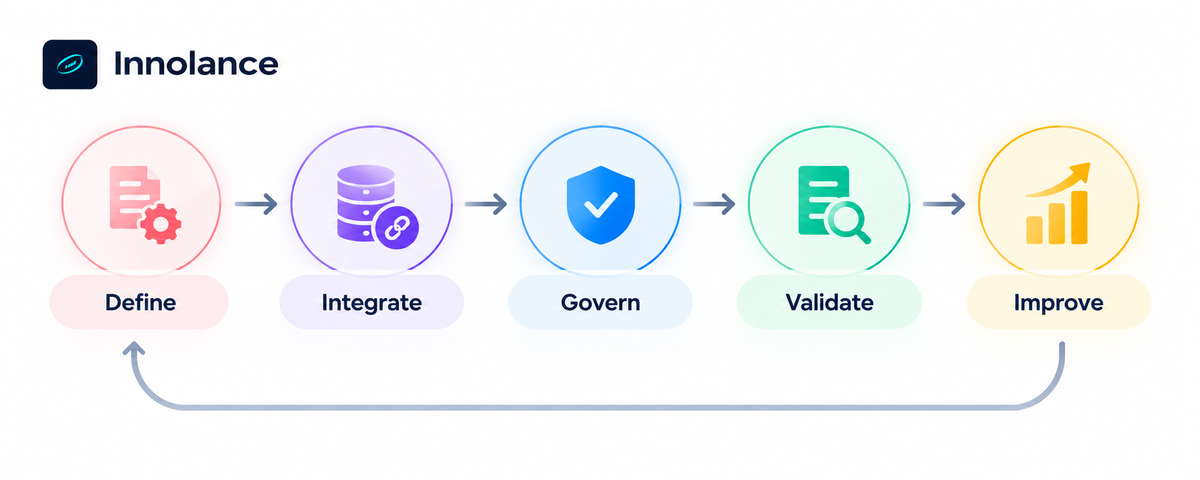
Start by standardizing shared definitions. Integrate systems around a clear source of truth. Establish ownership and governance rules. Validate whether information remains consistent across workflows, then improve the process as the organization evolves.
What Should Leaders Do Next?
Start with one important customer journey, such as the transition from marketing-qualified lead to sales opportunity.
Trace the data across systems, fields, definitions, ownership changes, and reporting logic. Identify where the sales and marketing views begin to diverge.
Innolance helps organizations examine CRM data, workflows, integrations, and governance as connected operational processes. This helps revenue operations leaders address the underlying causes of data misalignment instead of repeatedly reconciling reports.
Conclusion
Sales and marketing do not develop different CRM views simply because they use different dashboards.
Misalignment often originates in definitions, disconnected systems, inconsistent handoffs, unclear ownership, and changing workflows.
By strengthening sales and marketing CRM data alignment through shared definitions, customer data integration, governance, and consistent workflows, organizations can reduce CRM data silos and build a more reliable foundation for revenue decisions.