
FinTech · Delivery Predictability
Delivery Predictability: Stabilizing a Slipping Roadmap
Chronic overcommitment made delivery unpredictable. Innolance established capacity discipline and predictability analytics that made commitments reliable again.
Strategic Problem
As the FinTech organization grew, increasing delivery pressure pushed teams to commit to more work than they could consistently complete. Roadmap expectations continued to rise, but the relationship between planned commitments, available capacity, and actual delivery performance became increasingly difficult to manage.
Overcommitment gradually reduced confidence in delivery plans. When teams could not complete everything they had committed to, work carried into future sprints and roadmap dates required repeated adjustment. Leadership was increasingly pulled into reprioritization instead of relying on a stable delivery plan.
The challenge was not simply that teams needed to work faster. Leadership needed a clearer understanding of what teams could realistically deliver based on actual capacity and throughput.
Without that visibility, commitments were vulnerable to optimism rather than execution evidence. The strategic challenge was therefore to establish stronger delivery discipline and create a more reliable connection between capacity, commitments, and roadmap expectations.
Visibility Gap
Leadership lacked a reliable view of team capacity and actual throughput, making it difficult to determine whether planned commitments were realistic before work began.
Roadmap plans could appear achievable during planning, while underlying capacity constraints made those commitments difficult to sustain during execution. Without consistent visibility into how much work teams could actually complete, overcommitment often became visible only after sprint carryover increased or delivery dates began to move.
This created a gap between planned delivery and actual delivery capacity. Leaders had limited ability to recognize when commitments were exceeding sustainable throughput, which made early intervention and prioritization more difficult.
A clearer view of capacity, throughput, and commitment reliability was needed so leadership could identify delivery risk earlier and align roadmap expectations with realistic execution conditions.
Execution Friction
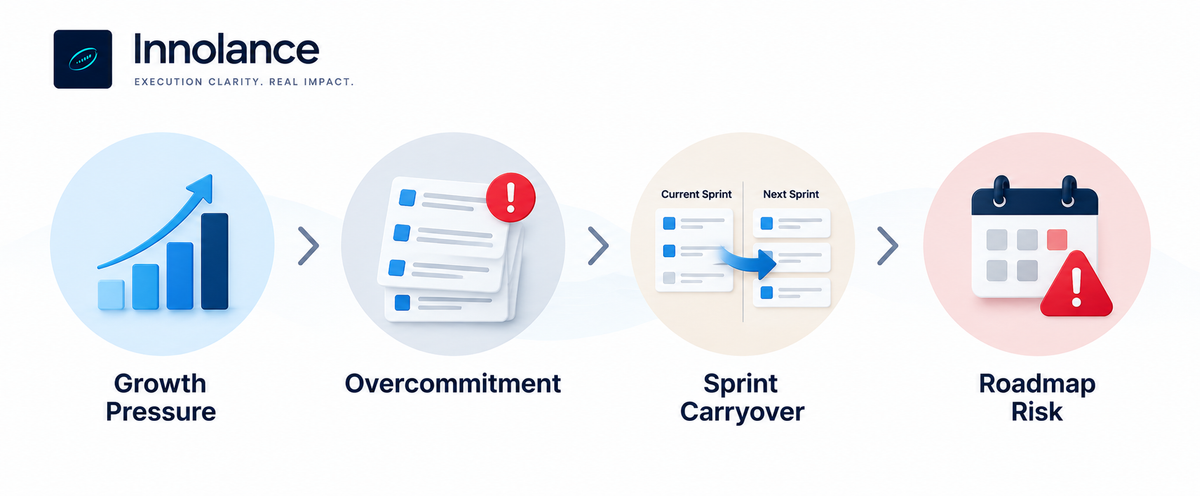
As delivery pressure increased, the gap between planned commitments and actual capacity created recurring friction across execution. Teams frequently carried unfinished work into future sprints, while roadmap expectations had to be adjusted to reflect what could realistically be delivered.
Repeated sprint carryover made planning less stable. Work that was expected to be completed in one cycle continued into the next, reducing available capacity for newly planned initiatives and creating additional pressure on future commitments.
This also increased the amount of reactive replanning required from leadership and delivery teams. Instead of working from a stable roadmap, priorities had to be revisited as overcommitment and incomplete work affected downstream plans.
The friction was therefore not simply caused by missed dates. It came from the ongoing mismatch between commitments, throughput, and available capacity. Without stronger visibility into these conditions, delivery risk continued to surface too late and roadmap confidence declined.
What Innolance Implemented
Innolance focused on making flow, capacity, and delivery risk more visible so commitments could be based on actual execution conditions rather than optimistic assumptions.
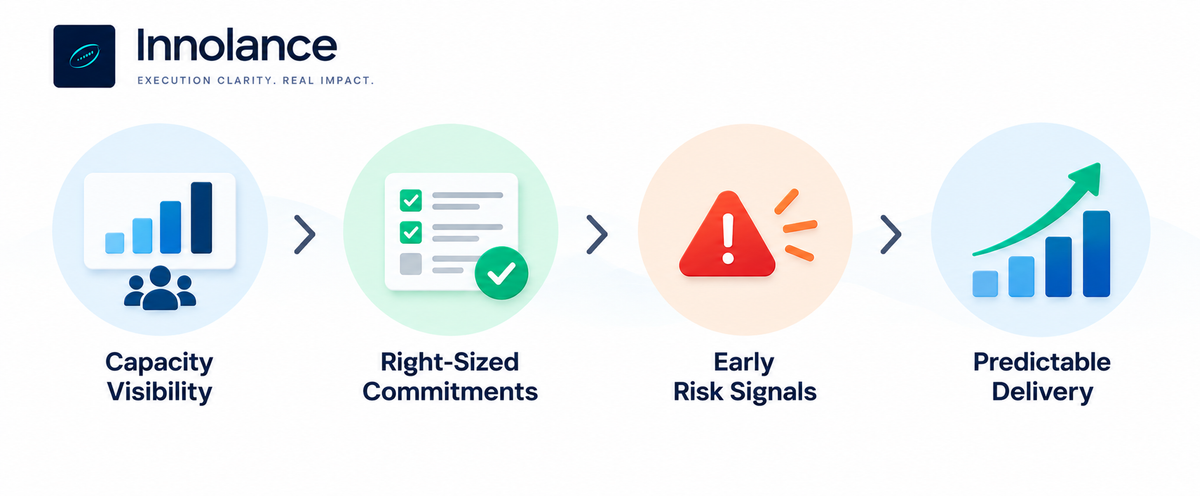
Teams gained a clearer view of throughput and available capacity, helping them understand what could realistically be completed within each delivery cycle. This made it easier to right-size commitments and reduce the pattern of consistently carrying unfinished work into future sprints.
Innolance also introduced capacity-aware commitment reviews so planned work could be evaluated against what teams had historically demonstrated they could deliver. This created a stronger connection between roadmap expectations and actual execution capacity.
In addition, predictability signals were used to surface delivery risk earlier. Instead of waiting for sprint carryover or slipping dates to reveal a problem, leaders could recognize when commitments were beginning to move beyond sustainable delivery conditions.
Together, these changes strengthened Execution Clarity by connecting capacity, throughput, commitments, and roadmap risk. Leadership gained a more reliable basis for planning, prioritization, and delivery decisions.
Operational & Delivery Outcomes
With commitments better aligned to actual capacity and throughput, delivery became more stable and predictable.
Commitment reliability improved as teams were able to plan against more realistic execution conditions. Sprint carryover decreased, reducing the amount of unfinished work moving from one delivery cycle into the next.
The roadmap also became more stable because teams and leaders had earlier visibility into delivery risk. Instead of reacting after dates slipped, they could adjust commitments, priorities, or capacity before problems became more disruptive.
These improvements created a stronger foundation for predictable delivery. Teams could plan with greater confidence, while leadership gained a clearer view of whether roadmap expectations matched actual delivery capability.
Leadership Impact
Leadership gained greater confidence in the roadmap because delivery commitments were more closely connected to actual team capacity and throughput.
Earlier visibility into delivery risk reduced the need to wait for missed commitments before taking action. Leaders could recognize when plans were moving beyond sustainable delivery conditions and make adjustments to priorities, capacity, or commitments sooner.
This also reduced the amount of reactive replanning required from leadership. Instead of repeatedly responding to slipping dates, leaders could focus more on steering the delivery system and maintaining alignment between business priorities and execution capability.
Most importantly, stronger Execution Clarity created a more reliable connection between planning and delivery. Leadership could make roadmap decisions with better evidence, improve confidence in commitments, and support a more predictable delivery environment.