
FinTech · Delivery Predictability
FinTech achieves delivery predictability
A FinTech scale-up replaced surprise slippage with trustworthy delivery forecasts by installing execution clarity.
Strategic Problem
As the FinTech scale-up grew, leadership faced increasing pressure to make firm delivery commitments to customers and the board. However, the delivery organization did not have enough confidence in the dates being communicated.
Roadmap commitments were being made without a sufficiently reliable view of the execution conditions behind them. As work progressed across teams, changing priorities, dependencies, and delivery constraints made it difficult to determine whether planned dates remained achievable.
This created a growing gap between leadership commitments and delivery confidence. When dates slipped unexpectedly, the impact extended beyond individual projects. Repeated uncertainty began to strain relationships with customers and reduced confidence in the roadmap at the board level.
The strategic challenge was therefore not simply improving delivery speed. The organization needed stronger Execution Clarity so leadership could connect commitments with actual delivery conditions, identify risk earlier, and establish forecasts that teams, customers, and the board could trust.
Visibility Gap
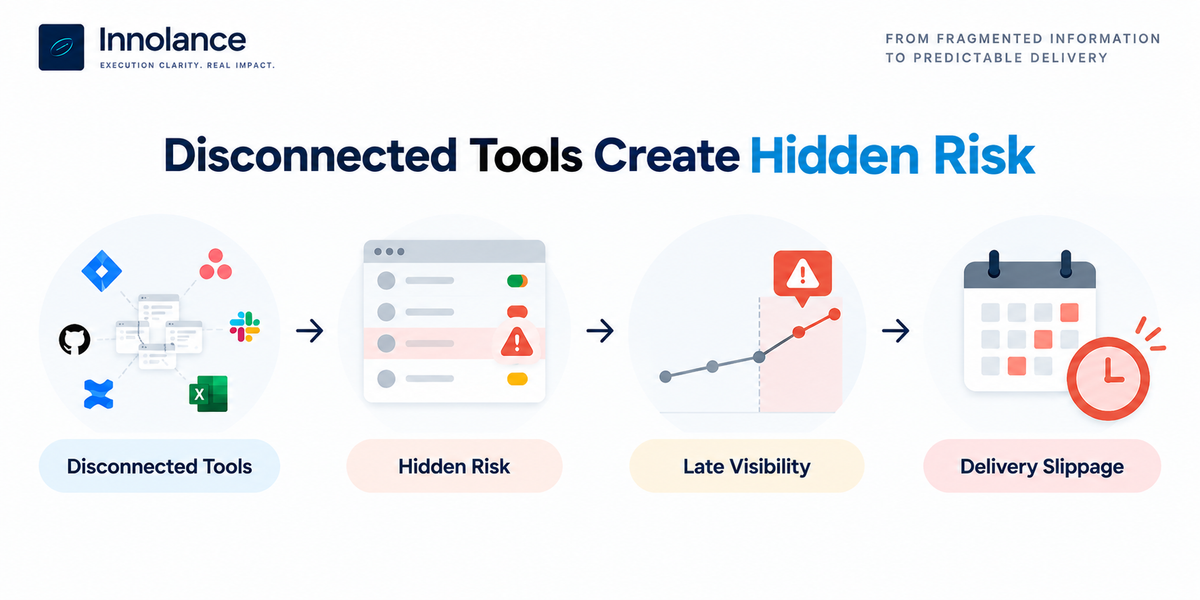
Status reporting was being assembled manually from disconnected tools, which made it difficult for leadership to see delivery risk early.
Each team had pieces of the picture, but there was no single, reliable view connecting planning data, delivery progress, dependencies, and emerging execution issues. As a result, risk often became visible only after work was already delayed or commitments were beginning to slip.
This created a gap between reported status and actual delivery conditions. Leadership could see activity, but not always the signals showing whether roadmap commitments were still realistic.
Because cross-team dependencies and delivery changes were not consistently reflected in one view, leaders had limited time to respond before issues affected customers or board-level expectations.
The organization needed earlier, more connected visibility so delivery risk could be identified before it became a missed commitment.
Execution Friction
Because delivery status was assembled from disconnected tools, teams and leaders often lacked a shared view of how work was progressing across the organization. Cross-team dependencies were tracked informally, making it harder to see which handoffs or coordination points were putting commitments at risk.
Plans were also not consistently reconciled with actual execution conditions. As priorities shifted and dependencies changed, roadmap assumptions could become outdated without being reflected quickly enough in leadership reporting.
This created recurring friction between planning and execution. Teams had to react to issues after they surfaced, while leadership had limited time to adjust commitments before delivery dates were affected.
The result was a more reactive delivery environment, where missed handoffs, late risk signals, and inconsistent planning made trustworthy forecasting difficult.
What Innolance Implemented
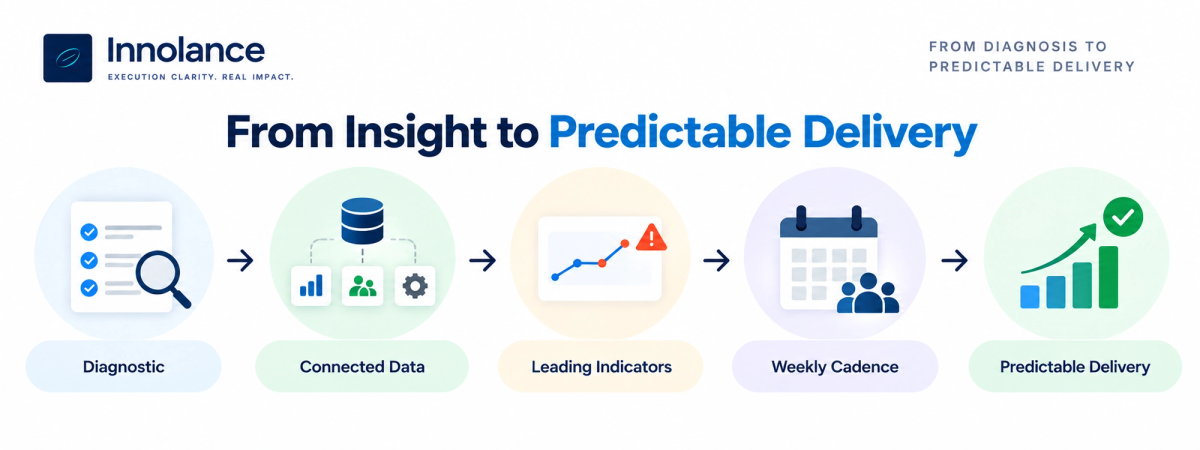
Innolance began with an Execution Clarity Diagnostic to identify where delivery visibility was breaking down and why risk was surfacing too late.
Planning and delivery data were then connected so leadership could move away from manually assembled status updates and gain a more consistent view of execution across teams. This created a clearer link between roadmap commitments, actual progress, and emerging delivery constraints.
Innolance also introduced leading indicators to help surface delivery risk before milestones slipped. These signals gave leaders earlier warning when dependencies, delays, or execution patterns suggested that commitments were becoming less reliable.
A weekly operating cadence was established to review the latest execution evidence, reconcile plans with reality, and support faster decisions when delivery risk emerged.
Together, these changes strengthened Execution Clarity by connecting planning, delivery data, risk signals, and leadership decision-making into a more reliable operating rhythm.
Operational & Delivery Outcomes
Within a quarter, the FinTech organization achieved significantly more reliable delivery forecasting. Leadership and delivery teams could use connected planning and execution data to identify risk earlier and respond before commitments were already slipping.
On-time delivery reached 92%, providing a much stronger foundation for customer and board commitments. Risk was also detected 3 weeks earlier, giving teams more time to address dependencies, adjust plans, and resolve issues before they became missed dates.
The new operating cadence reduced the gap between planning and reality. Instead of relying on hand-assembled status updates, teams could work from more current execution signals and reconcile roadmap expectations with actual delivery conditions.
These improvements helped replace surprise slippage with trustworthy delivery forecasts, creating a more stable and predictable delivery environment.
Leadership Impact
Leadership gained a more trustworthy view of delivery performance and could act on risk before it became a missed commitment.
With delivery risk identified 3 weeks earlier, leaders had more time to address dependencies, adjust priorities, and reconcile plans with actual execution conditions. This shifted leadership from reactive escalation toward more proactive delivery steering.
The improvement in forecasting also strengthened confidence in roadmap commitments. With 92% on-time delivery, leadership could communicate dates to customers and the board with greater confidence and reduce the uncertainty created by surprise slippage.
Most importantly, stronger Execution Clarity helped leadership connect planning, delivery data, and risk signals into a more reliable decision-making rhythm—supporting predictable delivery and rebuilding trust in the roadmap.
“For the first time, our dates mean something.”