
FinTech · Leadership Visibility
FinTech Modernization: Restoring Execution Visibility at Scale
A scaling fintech modernizing its platform lost visibility into how work flowed across teams. Innolance restored execution clarity — surfacing delivery risk early and stabilizing a slipping roadmap.
Strategic Problem
The company was modernizing its core FinTech platform while continuing to meet ongoing customer delivery commitments. As the modernization effort expanded across multiple teams, leadership found it increasingly difficult to understand how strategic initiatives, customer priorities, available capacity, and day-to-day execution were affecting one another.
Cross-team dependencies and competing priorities made delivery harder to coordinate, while existing status reporting provided limited insight into where execution risks were developing. Teams could appear to be making progress even when unresolved dependencies or capacity constraints were putting important roadmap commitments at risk.
Leadership needed greater visibility into the connection between planned modernization work and actual execution conditions. Without that clarity, it was difficult to determine whether commitments were realistic, identify emerging constraints early, or make informed decisions about priorities and resources.
The strategic challenge was therefore not simply completing the modernization initiative. It was creating enough Execution Clarity to modernize the platform at scale while maintaining predictable delivery and protecting existing customer commitments.
Visibility Gap
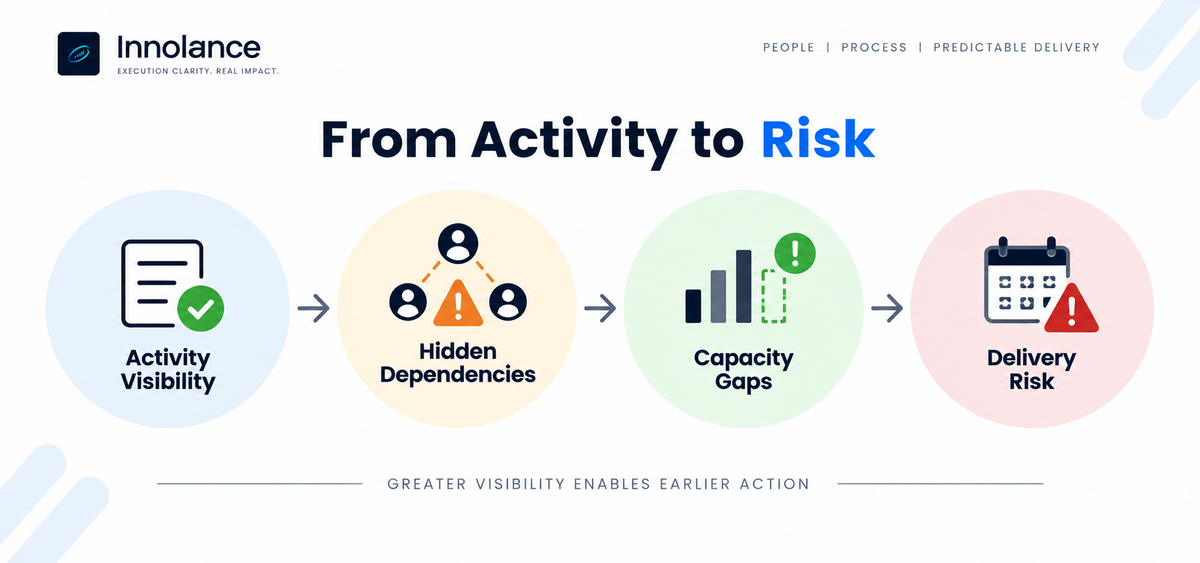
Existing status reports showed activity, but they did not give leadership a complete picture of how work was progressing across the modernization effort. Teams could report individual progress while important dependencies, capacity pressures, and emerging delivery risks remained difficult to see across the broader execution system.
Cross-team dependencies often became visible only after they had already started blocking work. At the same time, leadership lacked a consistent view of how available capacity compared with commitments across modernization initiatives and ongoing customer delivery.
This created a gap between reported progress and actual execution conditions. Work could appear on track while hidden dependencies, competing priorities, or capacity constraints were quietly increasing the risk of roadmap delays.
Leadership needed earlier visibility into these signals so constraints could be identified and addressed before they became missed commitments. Strengthening this visibility was essential for improving Execution Clarity and making delivery decisions based on actual execution conditions rather than activity alone.
Execution Friction
As the modernization effort progressed, hidden dependencies and capacity constraints began creating friction across delivery. Teams were actively working toward modernization goals, but competing priorities and cross-team handoffs made it difficult to maintain a consistent and predictable execution flow.
Roadmap dates began to slip as unplanned work competed with planned modernization initiatives. Dependencies that surfaced late forced teams to adjust sequencing, coordinate additional handoffs, or wait for other teams before work could continue. These interruptions increased delivery uncertainty even when individual teams appeared to be making progress.
Leadership often became aware of execution risks only when milestones were already under pressure. This reduced the time available to resolve blockers, rebalance capacity, or adjust priorities before customer commitments were affected.
The challenge was therefore not a lack of effort or activity. It was limited visibility into how dependencies, capacity, priorities, and delivery commitments interacted across teams. Earlier visibility into these constraints was necessary to reduce execution friction and create a more stable modernization roadmap.
What Innolance Implemented
Innolance focused on improving visibility across the execution system rather than adding another layer of activity-based reporting. The objective was to help leadership understand how modernization work was progressing, where constraints were forming, and which conditions were putting delivery commitments at risk.
Execution flow was instrumented across teams to create a clearer view of how work moved through the modernization program. Cross-team dependencies were made more visible, helping potential blockers surface earlier instead of becoming apparent only after work stalled.
Innolance also introduced capacity-aware commitment reviews so planned work could be evaluated against the capacity available to deliver it. This helped leadership identify where modernization priorities, customer commitments, and delivery capacity were becoming misaligned.
Leadership readouts shifted conversations away from simple status reporting toward a more evidence-based view of dependencies, capacity, delivery risk, and roadmap confidence.
Together, these changes strengthened Execution Clarity by connecting leadership expectations, portfolio commitments, and team execution. Leaders gained a clearer understanding of where execution was under pressure and where intervention was needed before risks became missed commitments.
Operational & Delivery Outcomes
With improved execution visibility, the organization was able to identify delivery risks earlier instead of discovering them only after roadmap commitments began to slip.
The modernization roadmap became more stable as teams and leaders gained a clearer view of how dependencies, available capacity, and competing priorities were affecting delivery. This made it easier to align commitments with actual execution conditions and reduce disruption from unplanned work.
Earlier dependency visibility also gave teams more time to coordinate across functions, adjust sequencing, and address blockers before they created larger downstream delays.
These improvements created a more predictable delivery environment and gave leadership greater confidence in modernization planning. The organization could balance strategic platform improvements with ongoing customer commitments using clearer evidence about capacity, dependencies, and execution risk.
Leadership Impact
Leadership gained a clearer view of how the modernization program was progressing across teams and where execution risks were beginning to emerge. Instead of relying mainly on status updates, leaders could better understand how dependencies, capacity constraints, and competing priorities were affecting roadmap commitments.
This stronger visibility supported more informed prioritization and resourcing decisions. When delivery pressure appeared, leadership had more time to adjust priorities, rebalance capacity, or address cross-team constraints before they developed into larger delivery problems.
The shared view of execution conditions also improved alignment between leadership and delivery teams. Both groups could focus on the same evidence when discussing risk, commitments, and where intervention was needed.
Most importantly, stronger Execution Clarity helped leadership connect strategic modernization priorities with actual delivery conditions. This created a more reliable foundation for steering the roadmap, protecting customer commitments, and supporting more predictable delivery.