
Insurance · CRM & Workflow Optimization
HubSpot CRM Integration: Operational Visibility for an Insurer
Fragmented systems made operational reporting unreliable. Innolance optimized and connected HubSpot to create reliable visibility, automate workflows, and reduce manual effort.
Strategic Problem
Customer operations were spread across disconnected systems, making it difficult for leadership to trust reporting across pipeline, service, and operational performance.
Fragmented data created inconsistent views of the business, while manual processes made it harder to maintain accurate and timely information. Without a reliable source of operational truth, leaders had limited confidence in the data used to understand performance and make decisions.
The strategic challenge was to create a more connected and reliable CRM environment that could improve reporting accuracy, strengthen operational visibility, and provide leadership with a trusted view of customer operations.
Visibility Gap
Operational data was fragmented across multiple systems, making it difficult for teams and leadership to maintain a consistent view of customer operations. Different dashboards could present conflicting information, while unreliable attribution created uncertainty around pipeline, service, and operational performance.
Because the data was not fully connected, teams often had to manually reconcile information before they could determine which numbers were accurate. This slowed reporting and made it harder to identify emerging operational issues quickly.
Leadership lacked a single, trusted source of operational truth across the customer lifecycle. Without reliable and consistent reporting, leaders had limited confidence in the information they needed to evaluate performance and make timely decisions.
Creating greater visibility required connecting the underlying CRM data and workflows so that reporting could provide a more accurate, consistent, and actionable view of operations.
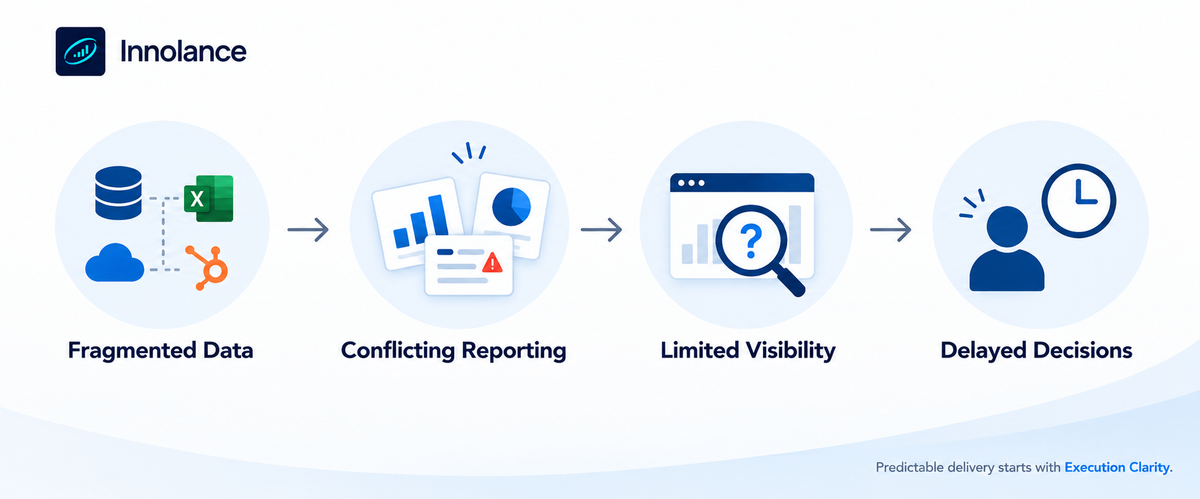
Execution Friction
Manual workflows and handoffs between disconnected systems created recurring friction across customer operations. Teams had to spend additional time moving, validating, and reconciling information before it could be used for reporting or operational decisions.
Because data and workflows were not fully connected, routine processes required manual intervention, increasing administrative effort and slowing the flow of information across teams. When inconsistencies appeared, employees had to investigate the underlying data before issues could be resolved.
These manual handoffs contributed to slower issue resolution and reduced confidence in operational reporting. Instead of focusing on higher-value work, teams spent valuable time maintaining processes and correcting information across systems.
The organization needed to reduce this friction by creating more connected and automated workflows, allowing operational data to move more consistently across the customer lifecycle.
What Innolance Implemented
Innolance focused on turning HubSpot into a more reliable operational system by improving the CRM structure, connecting fragmented data, and reducing dependence on manual workflows.
The HubSpot environment was optimized so customer and operational information could be managed more consistently across the lifecycle. Data was cleaned and connected to reduce conflicting records, improve reporting reliability, and create a stronger foundation for operational decision-making.
Innolance also automated key workflows that previously depended on manual handoffs. By reducing repetitive updates and disconnected process steps, teams could move information more efficiently and spend less time reconciling systems or correcting reporting inconsistencies.
Operational reporting was then strengthened so leaders could work from a more consistent view of pipeline, service, and customer operations. Together, these changes created a more reliable single source of operational truth, improved visibility, and supported faster issue resolution.
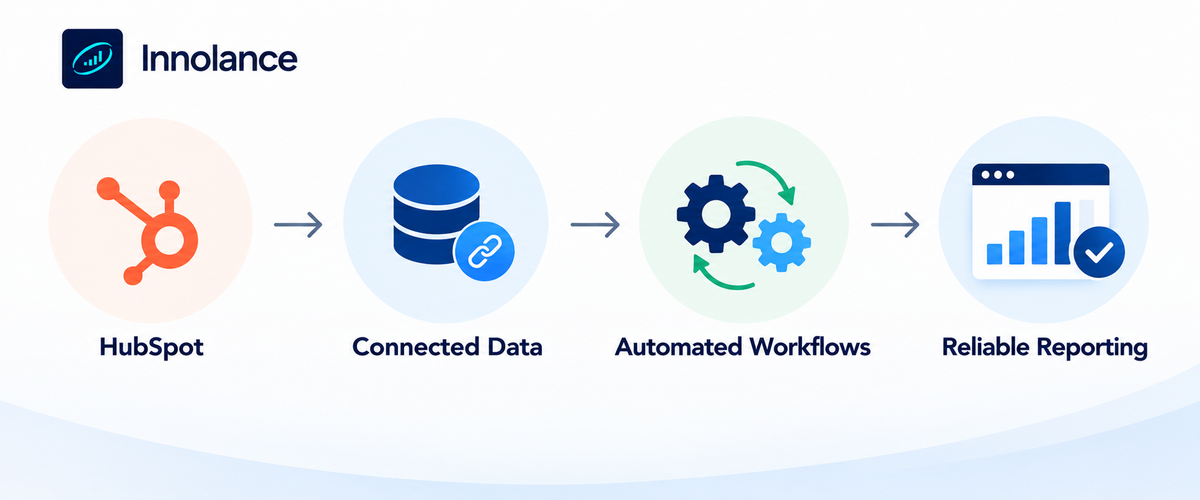
Operational & Delivery Outcomes
The optimized HubSpot environment created a more reliable and efficient operating model across customer operations. With cleaner, connected data and automated workflows, teams could spend less time reconciling information and more time acting on trusted operational insights.
Reporting reliability reached 96%, giving teams and leadership greater confidence in the information used to understand pipeline, service, and operational performance.
Manual effort decreased by 58% as automated workflows reduced repetitive processing and unnecessary handoffs between systems. With more consistent data and clearer visibility into operations, teams were also able to identify and address problems more quickly, resulting in 40% faster issue resolution.
Together, these improvements strengthened operational visibility across the customer lifecycle and created a more dependable foundation for day-to-day execution and decision-making.
Leadership Impact
Leadership gained a more reliable operational picture across pipeline, service, and customer operations, reducing the uncertainty created by conflicting dashboards and fragmented reporting.
With 96% reporting reliability, leaders could make decisions with greater confidence in the underlying data. The reduction in manual effort also meant teams spent less time preparing or reconciling reports, allowing leadership to focus more on interpreting performance and setting priorities.
The improvement in issue resolution gave leaders earlier visibility into operational problems and more time to respond before those issues created larger downstream impacts.
Most importantly, the connected HubSpot environment created a single, more trustworthy source of operational truth, giving leadership a clearer foundation for decision-making across the customer lifecycle.