
SaaS · Delivery Predictability
SaaS company cuts unplanned work
A SaaS operations team reduced unplanned work by connecting disconnected CRM and workflow data, automating key workflows, and improving operational visibility. The changes resulted in 38% less unplanned work and 2.4x faster reporting, helping the team shift from reactive firefighting to more proactive, predictable operations.
Strategic Problem
The SaaS operations team was spending too much time firefighting unplanned work because critical work and operational data were spread across disconnected systems.
Without a connected view of CRM and workflow activity, teams struggled to understand what was happening across operations in real time. Problems frequently required reactive attention, pulling people away from planned priorities and creating additional operational overhead.
As unplanned work increased, maintaining consistent execution became more difficult. Teams needed a better way to connect operational information, reduce unnecessary manual intervention, and identify issues before they disrupted planned work.
The strategic challenge was therefore to create stronger operational visibility so the organization could move from reactive firefighting toward more proactive and predictable execution.
Visibility Gap
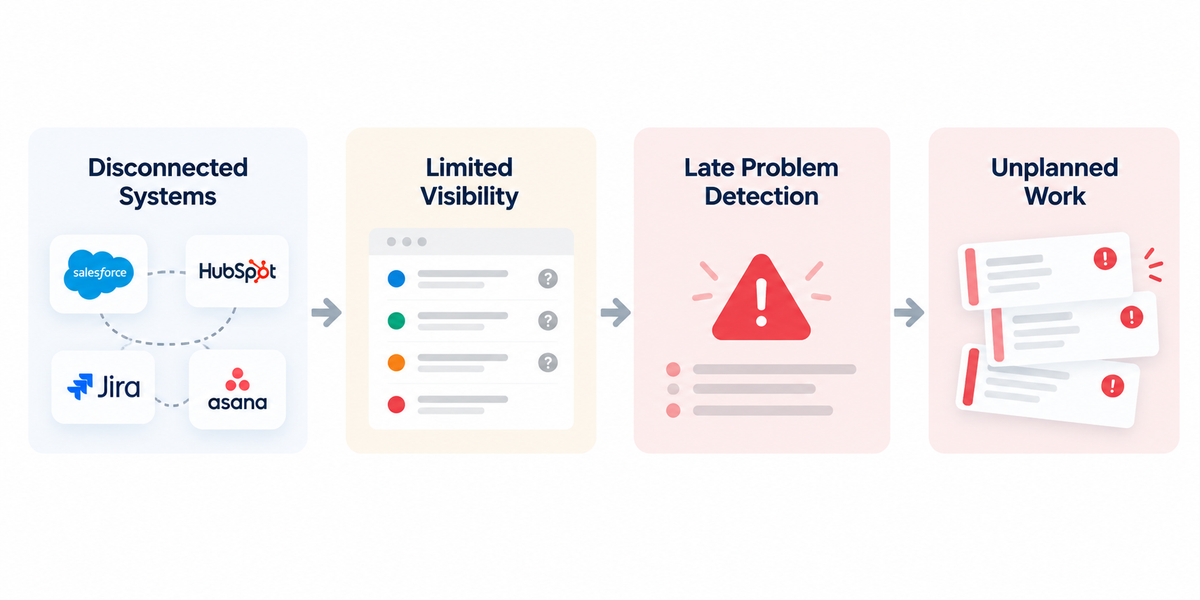
The operations team lacked a shared, real-time view of operational status because CRM and workflow data lived across disconnected systems.
Without a reliable view connecting work, data, and workflow activity, leaders and teams could not easily identify emerging problems. Operational issues often became visible only after they had already disrupted planned work and required immediate attention.
This limited the team’s ability to recognize risk early and contributed to a reactive operating environment. Instead of anticipating problems, teams frequently had to respond after issues surfaced.
The organization needed connected operational visibility so teams could identify problems earlier, reduce reactive work, and make more informed operational decisions.
Execution Friction
Manual hand-offs between disconnected tools created recurring friction across the SaaS operations team. Information often had to be transferred, updated, or reconciled manually as work moved between CRM and workflow systems.
These manual steps increased the risk of duplicate effort and rework. When information changed in one system but was not immediately reflected elsewhere, teams could spend additional time verifying data, correcting inconsistencies, or repeating work.
The lack of connected workflows also made execution more reactive. Instead of relying on automated processes to move information and work forward, teams frequently had to intervene manually to keep operations on track.
This friction consumed time that could otherwise be spent on planned priorities and contributed to the broader pattern of unplanned work across the organization.
What Innolance Implemented
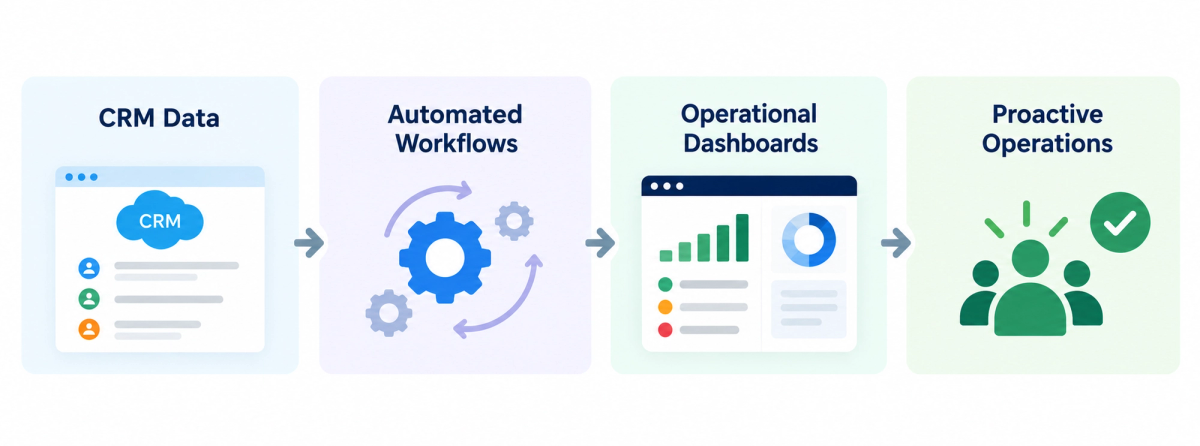
Innolance focused on creating a more connected operating model across the SaaS team’s CRM and workflow systems.
The CRM data model was cleaned to improve consistency and reduce the duplicate or incomplete information that was contributing to operational confusion. This created a stronger foundation for more reliable workflows and reporting.
Innolance then automated key workflows so information could move between systems with less manual intervention. By reducing repetitive hand-offs and updates, the team could spend less time reconciling data and responding to avoidable process breakdowns.
Operational dashboards were also introduced to give teams and leaders a clearer, shared view of current status. Instead of relying on fragmented information from multiple systems, they could use a more consistent source of operational visibility to identify issues earlier and respond with greater confidence.
Together, these changes helped shift the organization from reactive firefighting toward more proactive operations.
Operational & Delivery Outcomes
The improved CRM and workflow foundation helped the SaaS operations team reduce the amount of reactive work disrupting planned priorities.
Unplanned work decreased by 38%, allowing the team to spend more time on planned operational activities instead of repeatedly responding to issues after they surfaced. Reporting also became 2.4x faster, reducing the effort required to assemble and interpret operational status.
With cleaner data, automated workflows, and shared dashboards, the team gained earlier visibility into operational conditions and could respond before issues required significant manual intervention.
These improvements helped shift operations from a reactive firefighting model toward a more proactive and predictable way of working.
Leadership Impact
Leaders gained a clearer, more reliable view of operational performance through dashboards they could trust.
Instead of relying on fragmented updates from multiple systems, leadership could see current operational conditions in one place and identify where attention was needed. This reduced the time spent assembling status information and made decision-making more consistent.
With 38% less unplanned work and 2.4x faster reporting, leaders had stronger visibility into how the operation was performing and could focus more on priorities instead of recurring firefighting.
The result was greater confidence in day-to-day operational decisions and a stronger foundation for running the business proactively rather than reactively.