
Technology · Revenue Operations
Sales OS Transformation: Execution Clarity Across Revenue Operations
Inconsistent qualification inflated pipeline and eroded forecast confidence. Innolance built the operational governance and visibility to make revenue execution reliable.
Strategic Problem
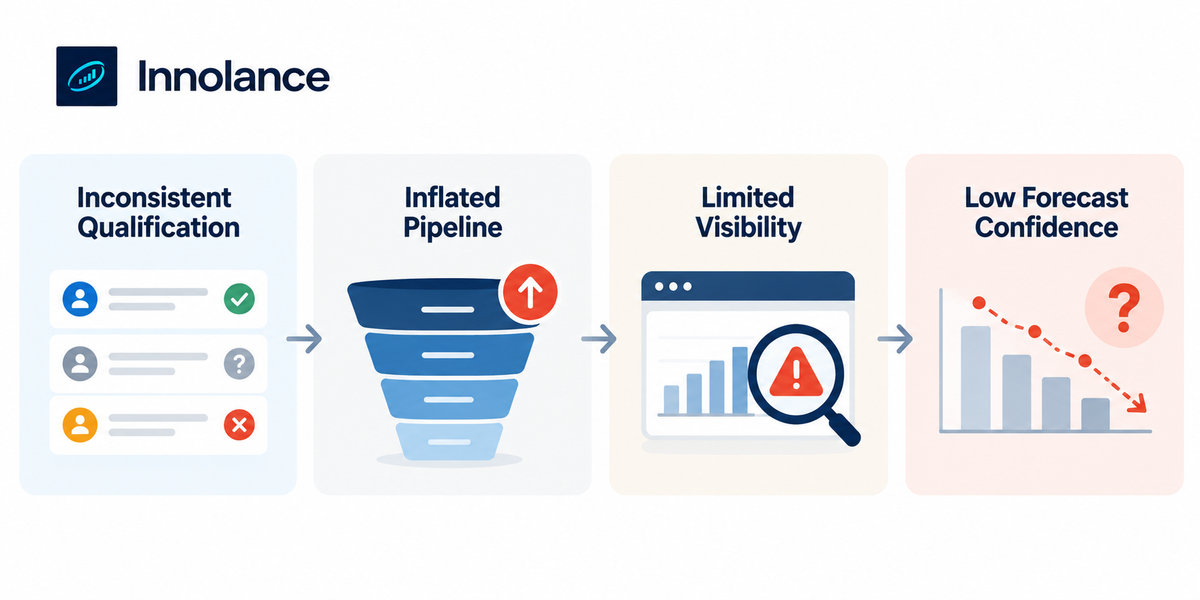
The organization prioritized pipeline creation, but qualification standards were applied inconsistently across the sales process. Opportunities could enter and progress through the pipeline without a consistent framework for determining whether they were genuinely qualified.
As a result, pipeline volume appeared stronger than the underlying opportunity quality. Inflated pipeline metrics made it difficult for leadership to distinguish between realistic revenue opportunities and deals that had not been sufficiently validated.
This inconsistency also reduced confidence in forecasting. When qualification criteria varied across opportunities, the reported pipeline could not always provide a dependable picture of expected revenue performance.
The strategic challenge was therefore not simply to generate more pipeline. The organization needed a more disciplined Sales Operating System that could establish consistent qualification standards, improve pipeline quality, and create greater confidence in revenue forecasts.
Visibility Gap
Leadership lacked a clear view of qualification quality, pipeline inflation risk, and forecast accuracy across the sales process.
Pipeline totals showed how much revenue opportunity had been recorded, but they did not consistently show whether those opportunities had met the same qualification standards. This made it difficult to distinguish between a large pipeline and a genuinely reliable pipeline.
Without clearer visibility into qualification quality, leadership could not easily identify where weak opportunities were inflating reported pipeline or how those opportunities were affecting forecast confidence.
The organization needed a more transparent view of which opportunities were truly qualified, where pipeline risk existed, and how accurately the pipeline reflected expected outcomes.
Execution Friction
Inconsistent qualification created recurring friction between sales teams and leadership. Reported pipeline could appear strong, but when opportunities did not consistently meet the same qualification standards, actual outcomes could diverge from what the pipeline suggested.
This gap made revenue discussions more difficult. Sales teams focused on pipeline creation, while leadership needed greater confidence that reported opportunities represented realistic revenue potential.
Without consistent qualification governance, teams lacked a shared framework for evaluating opportunities and determining when they should progress through the sales process. This reduced confidence in pipeline reporting and made forecasting less dependable.
The organization needed to reduce this friction by establishing clear qualification standards, stronger CRM validation, and shared visibility into pipeline quality, creating greater alignment between sales execution and leadership expectations.
What Innolance Implemented
Innolance introduced a more structured Sales Operating System to improve qualification consistency, pipeline quality, and forecast reliability.
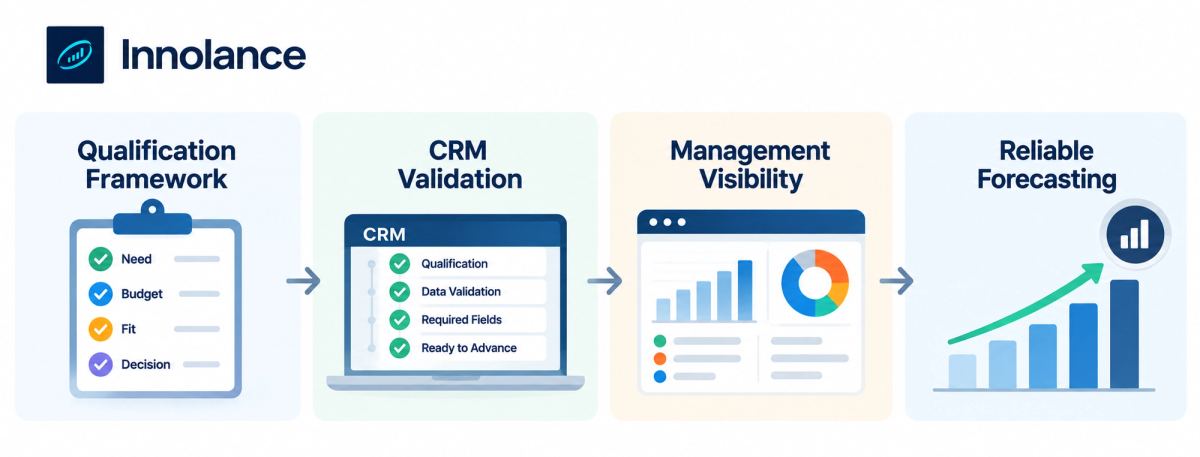
A structured qualification framework established clearer standards for determining whether opportunities should progress through the sales process. This created a more consistent approach to evaluating opportunity quality instead of relying primarily on pipeline volume.
Innolance also implemented CRM validation workflows to reinforce those qualification standards within the sales process. These controls helped ensure that required qualification criteria were captured and validated before opportunities advanced.
Management dashboards were then used to give leadership clearer visibility into qualification quality, pipeline health, and forecast confidence. This made it easier to identify weak opportunities, monitor pipeline inflation risk, and understand how qualification quality was affecting expected revenue performance.
Together, the qualification framework, CRM validation workflows, and management dashboards created greater Execution Clarity across Revenue Operations, aligning sales behavior with a more reliable and governable revenue process.
Operational & Delivery Outcomes
The more structured qualification process improved the quality and reliability of the revenue pipeline.
The organization achieved an 81% SQL approval rate, reflecting greater consistency in how qualified opportunities progressed through the sales process. Qualified pipeline increased by 18%, giving the organization a stronger foundation for revenue execution without relying on inflated pipeline volume.
Forecast confidence reached 92%, demonstrating greater trust in the pipeline information used to understand expected revenue performance.
The cleaner, more reliable pipeline also contributed to improved close rates by allowing teams to focus on opportunities that had passed more consistent qualification standards.
Together, these outcomes created a more dependable revenue operating model built around pipeline quality rather than pipeline volume alone.
Leadership Impact
Leadership gained a more dependable view of revenue performance and greater confidence in the numbers used to guide decisions.
With 92% forecast confidence, leaders could rely more heavily on the pipeline when evaluating expected outcomes. The 18% increase in qualified pipeline also gave leadership a clearer picture of genuine revenue opportunity rather than inflated pipeline volume.
The 81% SQL approval rate reflected stronger qualification discipline, helping leadership see that opportunities were progressing through a more consistent and governed process.
Most importantly, the new Sales Operating System improved alignment between sales behavior and business strategy. Leaders could trust the pipeline, identify risk earlier, and make revenue decisions with greater confidence.