
SaaS · Delivery Predictability
Reducing Unplanned Work at a Scaling SaaS Company
Unplanned work was quietly consuming delivery capacity. Innolance made intake and flow visible, cutting unplanned work and restoring focus to planned outcomes.
Strategic Problem
The SaaS organization had active teams and significant delivery activity, yet planned outcomes continued to slip because unplanned work repeatedly displaced committed roadmap work.
Unexpected requests competed with planned priorities for the same delivery capacity. As teams responded to these demands, maintaining consistent progress against roadmap commitments became increasingly difficult.
Although teams remained busy, that activity did not always translate into the planned outcomes leadership expected. The organization needed a clearer way to understand how unplanned work was affecting capacity and establish stronger discipline around what entered the delivery flow.
The strategic challenge was to protect delivery capacity for planned work while creating greater control over unplanned demand.
Visibility Gap
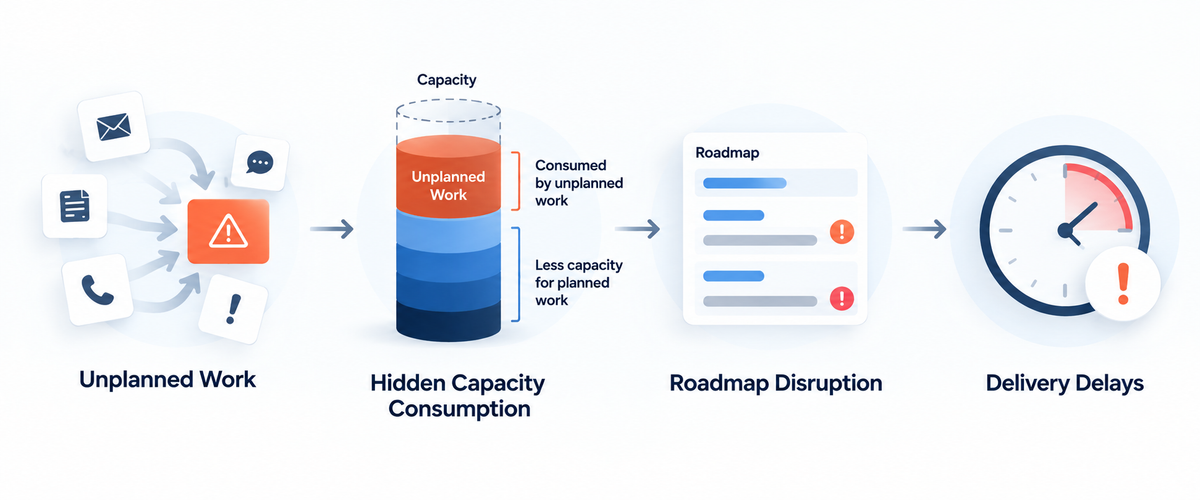
Leadership could see that planned work was slipping, but there was no clear view of how much delivery capacity unplanned work was consuming or where that work was coming from.
Without visibility into intake and flow, unexpected requests could enter the system without their cumulative impact becoming obvious. Teams remained active, yet leaders had limited evidence showing how operational demand was affecting committed roadmap work.
This made it difficult to separate capacity being used for strategic priorities from capacity being redirected toward unplanned activity. As a result, leaders could see the symptoms slower planned delivery but not always the underlying cause.
The organization needed greater Execution Clarity around work intake, capacity consumption, and delivery flow so unplanned work could be identified earlier and managed more deliberately.
Execution Friction
Unplanned work created recurring friction across the delivery process as teams continually shifted attention between committed roadmap priorities and unexpected requests.
Frequent context switching disrupted delivery flow and made it harder for teams to maintain consistent progress on planned work. Roadmap items stalled even while overall activity remained high.
This created a disconnect between team activity and delivery outcomes. Leaders could see teams working at capacity, but they lacked a clear explanation for why that effort was not consistently translating into completed roadmap commitments.
The organization needed to reduce this execution friction by creating stronger control over work intake and protecting capacity for planned, strategic outcomes.
What Innolance Implemented
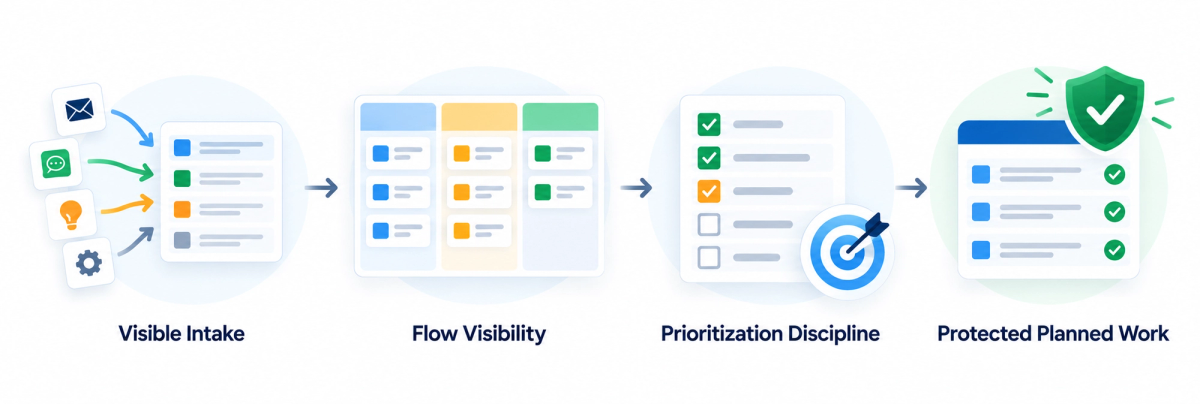
Innolance focused on making work intake and delivery flow more visible so the organization could understand where unplanned work was entering the system and how much capacity it was consuming.
Work intake was instrumented to create a clearer view of incoming requests, helping teams and leaders distinguish between planned roadmap work and unexpected operational demand.
Innolance also surfaced the true cost of unplanned work by connecting intake activity with delivery capacity and flow. This made it easier to see how unplanned requests were affecting committed work and contributing to roadmap disruption.
To reduce that impact, Innolance established stronger intake and prioritization discipline so unexpected work could be evaluated more consistently before displacing planned commitments.
Together, these changes created greater Execution Clarity around capacity, flow, and priorities, helping teams protect strategic work and maintain better focus on planned outcomes.
Operational & Delivery Outcomes
The improved visibility and stronger intake discipline produced measurable improvements in delivery performance.
The organization achieved 41% less unplanned work, reducing the amount of unexpected activity competing with committed roadmap priorities.
With fewer disruptions consuming delivery capacity, planned delivery became 27% faster, enabling teams to maintain more consistent progress toward planned outcomes.
The organization also achieved 60% less manual triage, reducing the effort required to review and manage incoming work.
Together, these improvements helped teams regain focus, protect delivery capacity, and create a more predictable flow of planned work.
Leadership Impact
Leadership gained a clearer view of where delivery capacity was actually being consumed and why planned commitments were slipping.
With 41% less unplanned work, leaders could better protect capacity for strategic priorities instead of allowing unexpected requests to continually displace roadmap work.
The 27% improvement in planned delivery speed gave leadership greater confidence that committed work could move forward with fewer disruptions. At the same time, 60% less manual triage reduced the operational effort required to manage incoming demand.
Most importantly, leaders gained stronger Execution Clarity around intake, capacity, and flow. This made it easier to protect strategic work from operational noise and make prioritization decisions with a more accurate view of delivery reality.